
B2B Cold Email Lead Generation: Why You Are Landing in Spam and How to Build a Real Infrastructure (2026 Guide)
By Deepak Jaiswal | B2B Growth Strategy Expert Reading Time: 12 Minutes
“Cold email is dead.”
If I had a dollar for every time a struggling agency owner or SaaS founder told me that, I would retire tomorrow. Cold email is not dead. What is dead is the lazy, amateur way people have been doing it for the last five years.
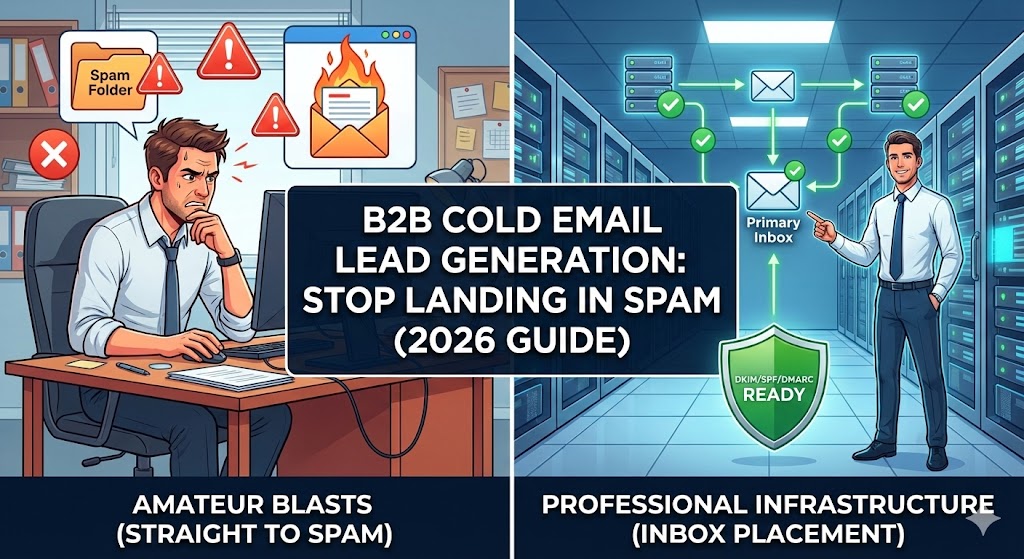
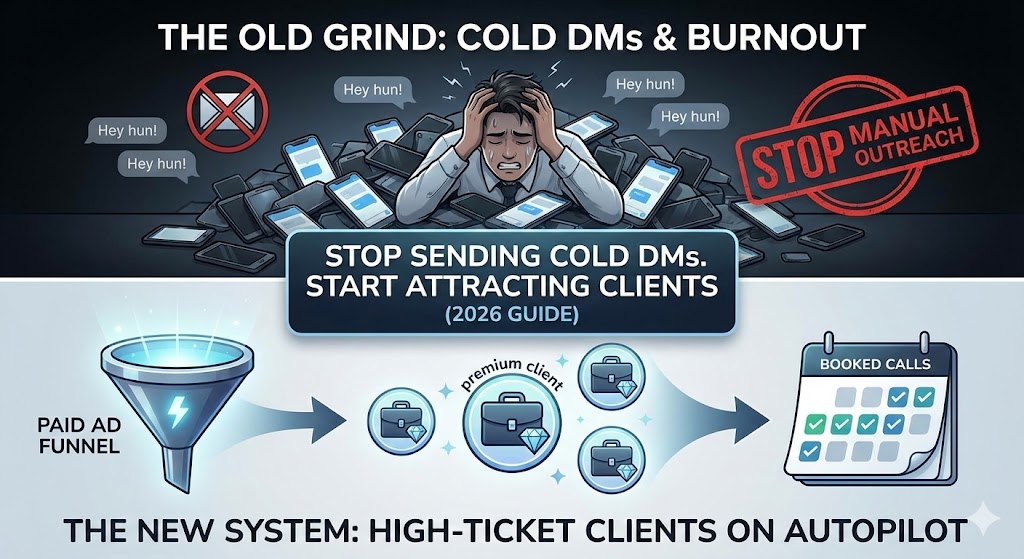
Here is what the average founder does: They buy a list of 5,000 emails from a cheap data provider. They load that list into Mailchimp or HubSpot using their company’s main email address (founder@mycompany.com). They write a terrible, five-paragraph pitch starting with “Hope this finds you well,” and hit send.
Within 48 hours, Google and Microsoft flag their domain as spam. Not only do their cold emails go straight to the junk folder, but now their actual clients are not receiving their regular emails or invoices. They literally burn their own digital house down.
If you want to master B2B cold email lead generation in 2026, you have to treat it like a serious IT infrastructure project, not a weekend marketing hack. You are fighting against billion-dollar spam filters. To win, you need burner domains, technical authentication, and hyper-relevant copy.
In this guide, I will show you exactly how to build a cold email machine that bypasses the spam folder, lands in the primary inbox, and books highly qualified sales calls on autopilot.
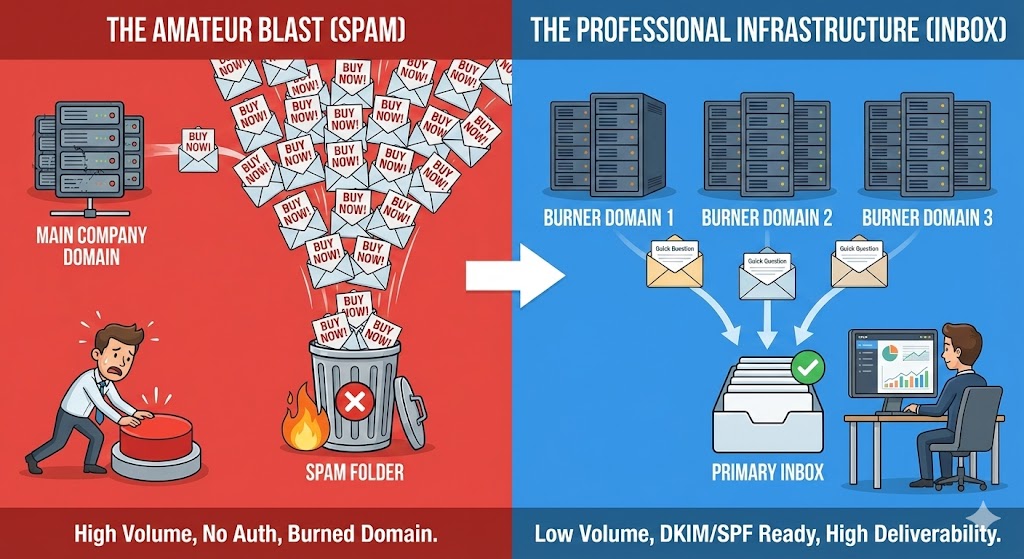
The Amateur Blast vs. The Professional Infrastructure
Spam filters analyze everything. They look at how old your domain is, how many emails you send per day, what words you use, and whether people actually reply to you. If you act like a spammer, you get treated like one.
Data Table: How the Amateurs Fail vs. How the Pros Scale
| Strategy | The Amateur Approach | The Professional 2026 Infrastructure |
| Domain Used | Main company domain (Huge Risk) | Secondary “Burner” Domains (Zero Risk) |
| Volume per Inbox | 500+ emails per day | Max 30-40 emails per day |
| Email Accounts | 1 account sending 1,000 emails | 20 accounts sending 30 emails each |
| Deliverability | 10% (Straight to Spam) | 95%+ (Primary Inbox) |
| The Copy | “We are the best, buy our service.” | “I noticed X problem at your company. Open to a fix?” |
| List Quality | Scraped, unverified junk data | Hand-picked, manually verified contacts |
Step 1: The "Burner Domain" Shield
This is the most non-negotiable rule of cold email: Never send cold outreach from your main company domain.
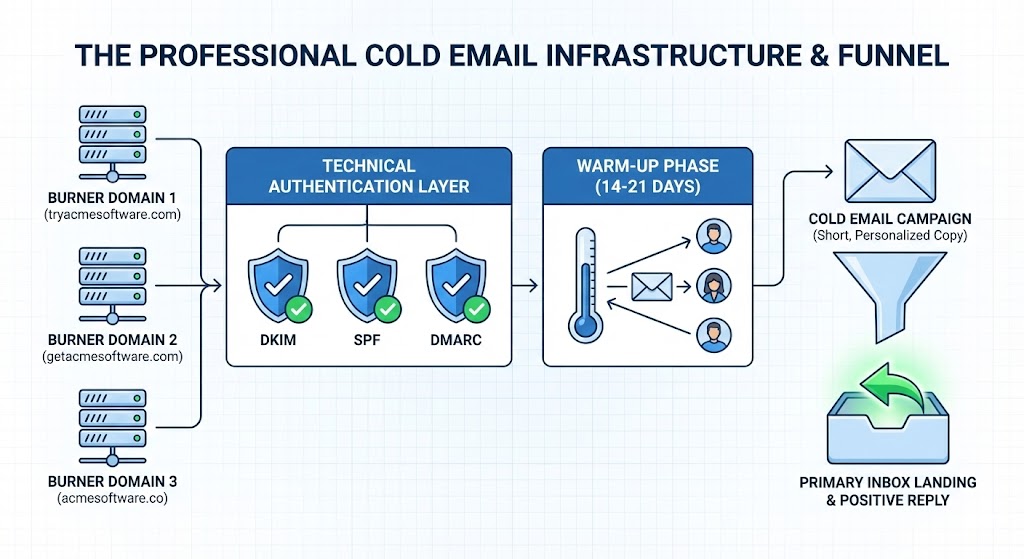
If your main website is acmesoftware.com, you must buy secondary domains that look similar but act as a shield. We call these “burner domains” or “lookalike domains.”
Buy domains like:
tryacmesoftware.com,getacmesoftware.com, oracmesoftware.co.Set up redirects: Forward all these secondary domains so that if a prospect types them into their browser, they instantly redirect to your main website.
Why do we do this? Because if one of these secondary domains gets blacklisted by Google for sending too many cold emails, your actual business operations remain completely safe. You just throw that burned domain away, buy a new $10 domain, and keep your campaigns running.
Step 2: The Technical Setup (DKIM, SPF, DMARC)
You cannot just buy a domain and start sending emails five minutes later. Google Workspace and Microsoft 365 will instantly reject your messages. You have to prove you are a real, authenticated sender.
This sounds incredibly nerdy, but you only have to set it up once. You need to add three specific text records to your domain’s DNS settings:
SPF (Sender Policy Framework): Tells the internet which servers are allowed to send emails on your behalf.
DKIM (DomainKeys Identified Mail): Adds a digital signature to your emails, proving they weren’t altered in transit.
DMARC (Domain-based Message Authentication): Tells receiving servers what to do if an email fails the SPF or DKIM checks.
If you do not have these three records perfectly configured, your B2B cold email lead generation campaign is over before it even begins. You will go straight to spam.
Step 3: Domain Warm-Up (Patience is Profitable)
Once your technical records are set, you still can’t send your pitch. New domains have a “neutral” reputation. If a 1-day-old domain suddenly sends 100 emails, it triggers massive red flags.
You have to “warm up” your inboxes.
You connect your new email accounts to a warm-up tool. This software automatically sends emails back and forth between thousands of other real people in the network. It opens the emails, replies to them, and marks them as “not spam.”
You must let your domains warm up for a minimum of 14 to 21 days before you send a single real sales email. This builds a pristine sender reputation with Google and Microsoft.
Step 4: Writing Human Copy and Selling the "Click"
Now that your infrastructure guarantees you will land in the primary inbox, you have to get the prospect to actually reply.
CEOs and Founders delete bad cold emails in 1.5 seconds. If your email is longer than 5 sentences, they won’t read it. If it contains bullet points of your services, they will delete it.
The Anatomy of a High-Converting Cold Email:
The Subject Line: Keep it boring and casual. “Quick question regarding [Company Name]” or just “Your outbound process.” Do not use capitalization or exclamation marks.
The Hook: Prove you actually researched them. “Hey John, saw you just hired three new SDRs in Chicago.”
The Problem/Offer: State the pain point simply. “Usually, when companies scale their sales team that fast, ramp-up time eats their margins. We built a system that cuts SDR ramp-up from 3 months to 3 weeks.”
The Call to Action (CTA): Do not ask for a 30-minute call. That is too big of an ask for a stranger. Ask for interest. “Worth sending over a short video breakdown?”
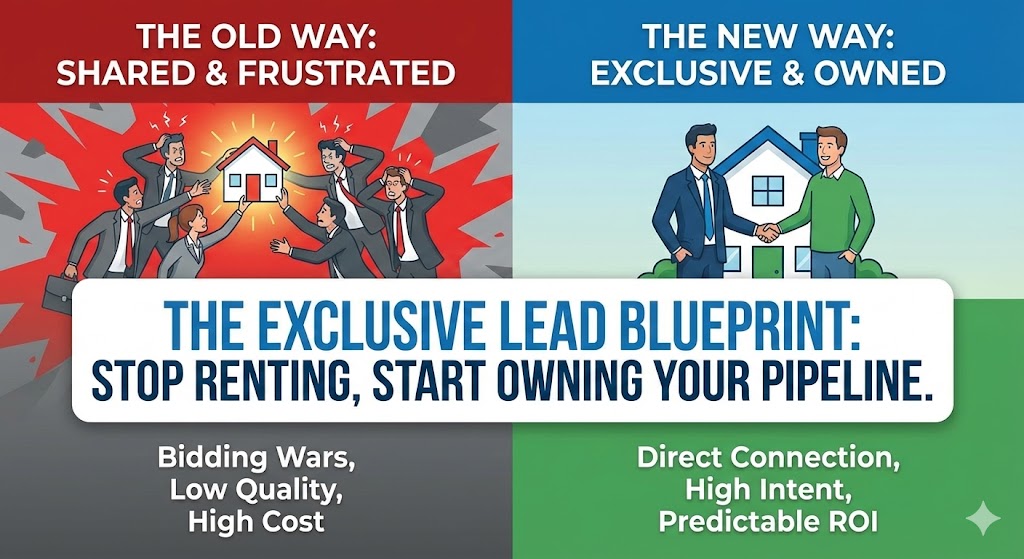
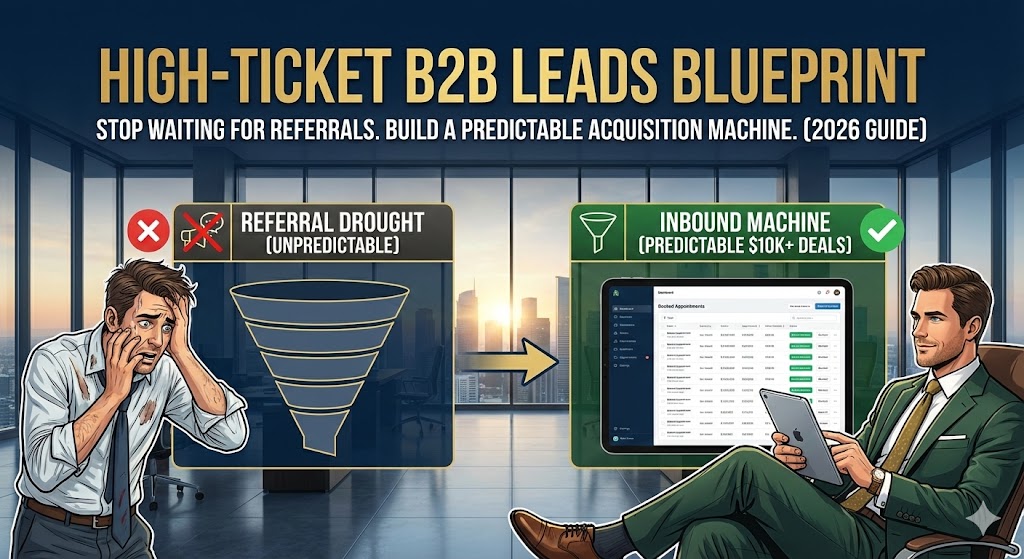
- When they reply “Yes, send the video,” you do not send them to a generic homepage. You send them to a highly engineered conversion asset. If you want to know exactly how to structure that video, read my blueprint on building automated funnels for high-ticket B2B leads.
Conclusion: Stop Guessing, Start Building
You can have the greatest B2B product or agency service in the world, but if nobody knows you exist, your business will fail.
B2B cold email lead generation is the most scalable, cost-effective way to put your offer in front of highly targeted decision-makers. But the days of blasting 10,000 unverified emails from your personal Gmail account are over.
You must respect the spam filters. Buy burner domains, configure your DNS records, warm up your inboxes, and write short, punchy copy that actually solves a problem. When you build this infrastructure correctly, you create a machine that prints qualified sales appointments on demand.
You can have the greatest B2B product or agency service in the world, but if nobody knows you exist, your business will fail.
Want me to Build Your Cold Email Machine?
Setting up burner domains, DNS records, and warming up inboxes takes a lot of technical work. If you want to skip the headache and just get straight to closing deals, let my team build your entire infrastructure. Click below to book a B2B Growth Audit and we will map out your exact outbound strategy.
- All Posts
- Knowledge Hub
Frequently Asked Questions
1. Is cold email legal in 2026?
Yes, B2B cold email is perfectly legal in the US under the CAN-SPAM Act, provided you follow the rules. You must include a physical business address in your signature, offer a clear way to opt-out (even if it’s just saying “Let me know if you aren’t the right person”), and you must be reaching out with a legitimate business purpose relevant to their job title. (Note: EU laws under GDPR are stricter, requiring legitimate interest).
2. Should I use open tracking and link tracking?
Absolutely not. In 2026, spam filters heavily penalize emails that contain hidden tracking pixels or tracked links. The goal of a cold email is to get a reply, not a click. Turn off open tracking to drastically improve your deliverability and inbox placement.
3. How many emails should I send per day per inbox?
To stay completely under the radar of Google and Microsoft’s spam algorithms, never send more than 30 to 40 cold emails per day per inbox. If you want to send 400 emails a day, you don’t send them from one account; you set up 10 different email accounts and send 40 from each.
4. Where do I get high-quality email lists?
Do not buy cheap, pre-made lists from shady websites. Use professional B2B databases like Apollo.io, ZoomInfo, or seamless.ai to build highly targeted lists based on job titles and company size. Then, run that list through an email verification tool (like NeverBounce or MillionVerifier) to remove dead emails before you ever hit send.
5. What is the biggest mistake people make in cold email copy?
Talking about themselves. The prospect does not care when your company was founded, how many awards you have won, or what your mission statement is. They only care about their own problems. Change every “I” and “We” in your email to “You”, and your reply rates will double.