Facebook Ads for Coaches
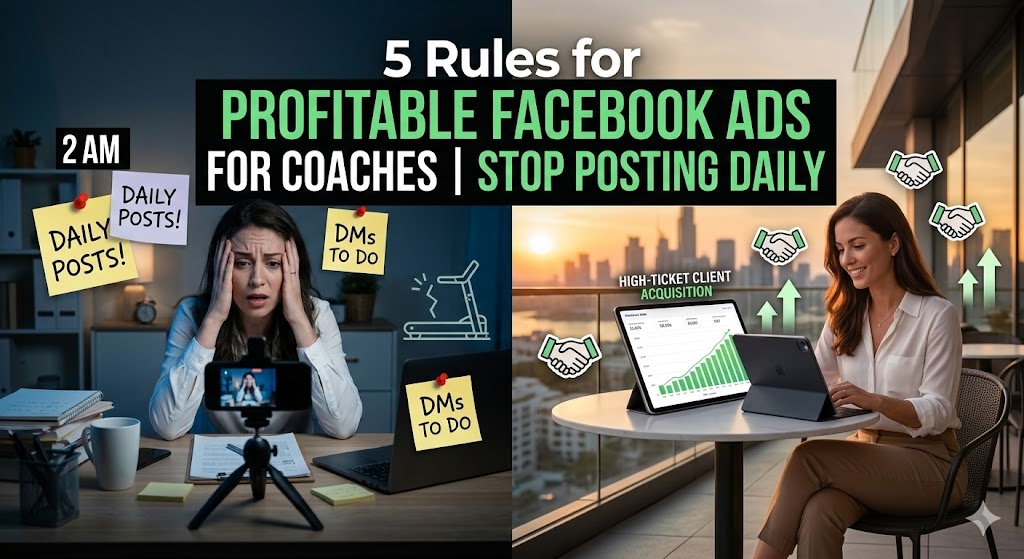
Home Services Performance Marketing Social Media Ads Google Ads Facebook Ads Pay Per Click Ads About Me Knowledge Hub Home Services Performance Marketing Social Media Ads Google Ads Facebook Ads Pay Per Click Ads About Me Knowledge Hub Book A Discovery Call 5 Rules for Profitable Facebook Ads for Coaches | Stop Posting Daily. By Deepak Jaiswal | Consultant Growth Expert Reading Time: 12 Minutes Let’s be brutally honest: the modern coaching industry is pushing a toxic marketing lie. The lie is that to get high-paying clients, you need to post three Reels a day, dance to trending audio, send 50 cold DMs every morning, and be a slave to the Instagram algorithm. You became a coach to change lives and build financial freedom, not to become a full-time content creator. If you are a business coach, fitness consultant, mindset mentor, or life coach charging $1,500 to $10,000+ for your programs, relying purely on organic reach is a dangerous game. Organic reach is unpredictable. It doesn’t scale on command. The most successful coaches in the industry have stepped off the organic content treadmill. Instead, they use Facebook Ads for Coaches to buy back their time and build a predictable, automated pipeline of high-intent leads. But running ads for a high-ticket coaching offer isn’t the same as selling e-commerce products. You are selling trust, authority, and transformation. If your ads feel like a cheap infomercial, you will burn through your budget in days. Here are the 5 non-negotiable rules to run profitable Facebook Ads for your coaching business and finally stop posting daily. Rule #1: Stop Selling “Coaching” – Sell a Unique Mechanism The fastest way to fail with Facebook Ads is to call yourself a “Life Coach” or a “Business Coach” in your ad copy. The market is entirely saturated with generic coaches. When a prospect sees an ad for “I will help you scale your business,” their brain immediately tunes it out. The Fix: Introduce a Unique Mechanism. Your Unique Mechanism is the proprietary system, framework, or methodology you use to get clients their results. People don’t want to buy “coaching sessions”; they want to buy a proven vehicle to get from their current pain to their desired reality. Just as we discussed the importance of specific messaging in High-Ticket Roofing Google Ads, precision is what separates premium services from commodities. By giving your process a name, you position yourself in a category of one. This clear diagram contrasts the performance of generic coaching ads (left, red ‘X’) with ads selling a specific, named framework or unique mechanism (right, green checkmark). It visually proves why specific messaging wins on high-ticket platforms. Rule #2: The “Give Before You Ask” Video Funnel A cold prospect scrolling through Facebook is not going to hand over $5,000 to a stranger just because they saw a nice graphic. Asking them to “Book a Discovery Call” on the very first ad is like proposing marriage on a first date. The Fix: The 2-Step Video View Funnel. Instead of driving cold traffic straight to a calendar link, you need to build a digital relationship first. Top of Funnel (The Hook): Run a 3 to 5-minute educational video ad. This video should solve one specific micro-problem for your ideal client. Do not ask them to buy anything. Your only goal is to provide immense value. Middle of Funnel (The Retargeting): Use Meta’s Custom Audiences to create an audience of people who watched at least 50% or 75% of that first video. These are your warm leads. Now, show this specific group a secondary ad inviting them to download your training or book a call. By gating your calendar behind a value-first approach, you lower your Cost Per Lead (CPL) and ensure you are only speaking with highly qualified prospects. Rule #3: Lead Magnets That Filter (Not Just Capture) The traditional advice is to create a 1-page PDF checklist to get cheap email subscribers. While that works for building a massive newsletter, it is terrible for booking high-ticket coaching clients. Cheap leads usually equal cheap intent. The Fix: Use a Video Sales Letter (VSL) or In-Depth Training. Your lead magnet shouldn’t just capture an email; it should educate, indoctrinate, and filter out the freebie-seekers. This modern funnel diagram visualizes the critical education-first path. Arrows connect stylized icons from “Ad View” to “Booking,” demonstrating how a 15-minute VSL filters leads before they ever reach your calendar, ensuring you only spend time on high-intent calls. Rule #4: Broad Targeting + Highly Specific Copy Two years ago, media buyers spent hours finding hidden “interests” on Facebook. They would target fans of Tony Robbins, specific business magazines, or niche software tools. Thanks to Meta’s AI and Advantage+ Campaign settings, those days are over. The algorithm is now smarter than any human media buyer. The Fix: Let the Copy Do the Targeting. Today, the best strategy is to leave your audience targeting relatively broad (e.g., Men and Women, ages 30-55, in the US/UK/Canada) and let your ad copy find your exact client. If your copy starts with, “Attention 7-figure agency owners who are struggling with client churn…” the algorithm will quickly learn to show your ad only to that specific demographic based on who stops to read it. Your headline is your targeting. Your first three lines of text are the ultimate filter. Speak directly to your exact avatar’s pain points, and Meta’s machine learning will optimize delivery to find them. Rule #5: Know Your High-Ticket Math (LTV vs. CAC) The reason most coaches panic and turn off their ads is that they don’t understand the math behind high-ticket client acquisition. If you are used to selling $50 courses, spending $200 on ads without a sale feels terrifying. The Fix: Understand Customer Acquisition Cost (CAC) and Lifetime Value (LTV). If your coaching program costs $3,000, and it takes 10 discovery calls to close one client (a 10% close rate), you need to know what you can afford to pay for a call.
Roofing Google Ads
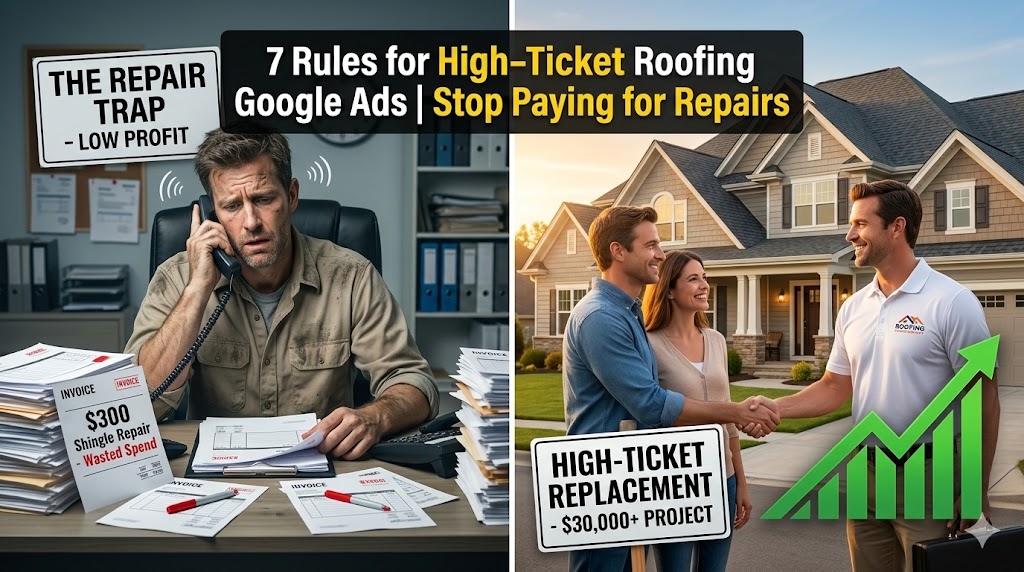
Home Services Performance Marketing Social Media Ads Google Ads Facebook Ads Pay Per Click Ads About Me Knowledge Hub Home Services Performance Marketing Social Media Ads Google Ads Facebook Ads Pay Per Click Ads About Me Knowledge Hub Book A Discovery Call 7 Rules for High-Ticket Roofing Google Ads | Stop Paying for Repairs By Deepak Jaiswal | Construction Growth Expert Reading Time: 10 Minutes Most roofing contractors have a love-hate relationship with Google Ads. They spend thousands of dollars, get plenty of clicks, and their phone rings constantly—but it’s always for a $300 shingle repair or a “free inspection” that leads nowhere. If you are paying $50+ per click only to book small repair jobs, your Roofing Google Ads strategy is broken. To scale a roofing business, you need high-ticket roof replacements ($15k–$50k+ projects). You need homeowners who aren’t just looking for a patch-up but are ready for a full transformation. Here are the 7 non-negotiable rules to stop wasting money on repairs and start dominating the high-ticket roofing market. Rule #1: Aggressive Negative Keyword Management The biggest “budget killer” in roofing ads is broad search intent. If someone searches for “roof leak repair kit” or “DIY roof patch,” you do NOT want to show up. The Fix: You must build an extensive negative keyword list before you launch. Exclude: “Repair,” “Patch,” “DIY,” “Leaking,” “Cheap,” “Used,” and “Jobs.” Focus: Put your budget behind “Replacement,” “Installation,” and “Contractors.” Rule #2: Use “Replacement-Specific” Landing Pages Never send your Google Ads traffic to your homepage. A homepage is a maze; a high-ticket buyer wants a straight path. The Fix: Create a dedicated landing page that only talks about Roof Replacements. Use high-quality photos of completed full-roof projects, not just a guy with a hammer. Your headline should scream “Premier Roof Replacement” instead of “General Roofing Services.” The Fix: Create a dedicated, conversion-optimized landing page that only talks about Roof Replacements. Use high-quality photos of completed full-roof projects, not just a guy with a hammer. Your headline should scream “Premier Roof Landing Page” instead of “General Roofing Services.” (Tip: If you also run Meta Ads for lead generation, ensuring your landing page matches the ad intent is critical across all platforms. Rule #3: Target High-Value Zip Codes, Not Just Cities In roofing, location is everything. Advertising to an entire city means you’ll get leads from old rental neighborhoods where owners only want the bare minimum. The Fix: Use Income-Based Targeting and Zip Code Layering. Target the affluent suburbs where homes are 20+ years old—that’s the “Sweet Spot” where roofs are naturally reaching the end of their life cycle. Rule #4: Leverage “Storm-Intent” vs. “Retail-Intent” High-ticket roofing falls into two categories: Storm (Insurance) and Retail (Out of Pocket). Your ad copy must speak to one or the other. The Fix: For Storm: Focus on “Insurance Claim Assistance” and “Zero Out-of-Pocket.” For Retail: Focus on “Financing Available,” “Lifetime Warranty,” and “Increased Home Value.” Mixing these two in one ad confuses the buyer. Rule #5: High-Ticket Trust Signals (The 3 G’s) To get someone to hand over $20,000, they need to trust you instantly. Most ads forget to mention the “3 G’s.” The Fix: Your ad extensions and landing page must highlight: Google Guaranteed: (The Green Checkmark is a click-magnet). Guarantees: “50-Year Material Warranty.” Google Reviews: Show your 4.8+ star rating prominently. Rule #6: The “Financing” Hook Let’s be honest: most homeowners don’t have $25k sitting in a drawer. If you don’t mention financing, you lose the middle-class high-ticket market. The Fix: Make “Low Monthly Payments” or “0% Interest for 12 Months” a primary headline in your Google Ads. This lowers the “barrier to entry” for a full replacement. Rule #7: Professional Video Pre-Roll (Remarketing) High-ticket roofing is rarely a one-click sale. People shop around. The Fix: Use Remarketing. If someone visits your landing page but doesn’t call, show them a professional video of you standing in front of a beautiful, newly replaced roof on YouTube or Facebook. This builds the “Authority” needed to close the deal. The ROI: Repair Leads vs. Replacement Leads Metric Repair Ads (The Mistake) Replacement Ads (The Rule) Avg. Project Value $450 $18,500 Cost Per Lead $40 $150 Close Rate 40% 20% Profit Margin Low (Labor Heavy) High (Material + Scale) Quarterly Revenue $15,000 $120,000+ The Fix: Use Remarketing. If someone visits your landing page but doesn’t call, show them a professional video of you standing in front of a beautiful, newly replaced roof. Similar to how high-converting B2B marketing strategies use video case studies to build authority, roofers need video proof to close the deal. Conclusion: Quality Over Quantity More leads won’t fix a bad roofing business; better leads will. By shifting your Google Ads focus from “fixing leaks” to “installing systems,” you transform from a handyman into a premium contractor. Stop paying for repairs and start owning the neighborhood. Want to dominate your local roofing market? Stop losing high-ticket replacements to your competitors. and get a custom marketing audit to start capturing the premium jobs you deserve. Book A Discovery Call All Posts Knowledge Hub Exclusive Real Estate Leads Read More Exclusive Solar Leads Read More Get high ticket clients without cold dm Read More Exclusive Kitchen Remodeling Leads Read More Commercial solar leads Read More Off Market Real Estate Leads Read More High ticket B2B leads Read More Exclusive home service leads Read More Facebook ads for solar leads Read More Load More End of Content. Frequently Asked Questions 1. What is a good Cost Per Lead (CPL) for roofing replacements? In a competitive market, a high-quality replacement lead can cost between $150 and $250. While this sounds high, remember that a single $20k job covers that cost many times over. 2. Should I bid on my competitor’s names? Yes, but only if you have a “Comparison” landing page that shows why your warranty or financing is superior. Otherwise, you’re just wasting money on their loyal customers. 3. Is “Google Guaranteed” worth the hassle for roofers? Absolutely.
Solar EPC Marketing
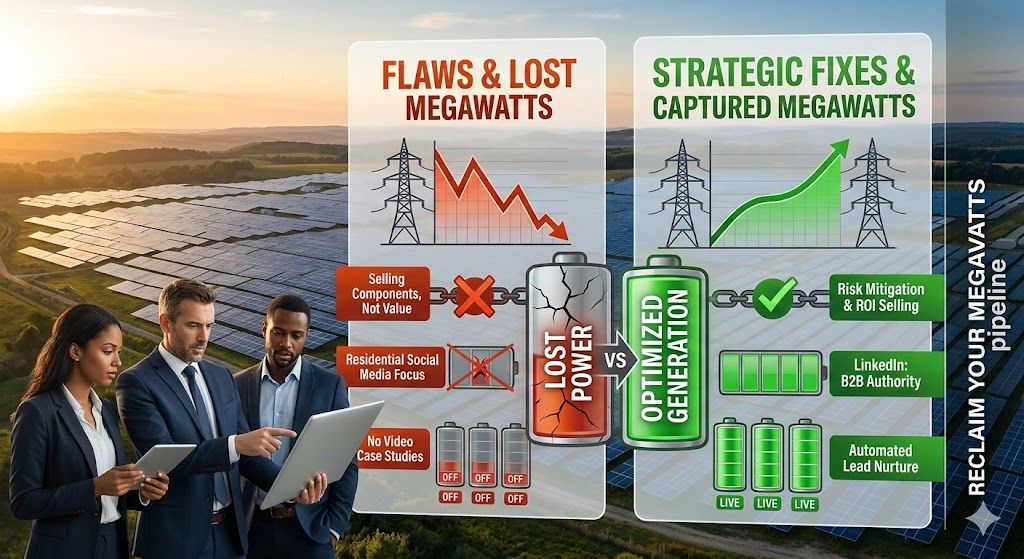
Home Services Performance Marketing Social Media Ads Google Ads Facebook Ads Pay Per Click Ads About Me Knowledge Hub Home Services Performance Marketing Social Media Ads Google Ads Facebook Ads Pay Per Click Ads About Me Knowledge Hub Book A Discovery Call Top 7 Flaws in Your Solar EPC Marketing Strategy Costing You Megawatts By Deepak Jaiswal | Construction Growth Expert Reading Time: 12 Minutes The global shift toward clean energy is an unprecedented gold rush for Solar Engineering, Procurement, and Construction (EPC) companies. Governments are setting ambitious net-zero goals, corporate mandates are demanding sustainability, and the leveled cost of solar energy continues to drop. The demand is clearly there. So why isn’t your sales pipeline bursting with utility-scale projects and massive commercial rooftops? The uncomfortable truth is that for many Solar EPCs, the weakness isn’t in their engineering, their supply chain, or their commissioning speed. It’s in their Solar EPC marketing. In a high-stakes, B2B niche where a single deal can represent tens of millions of dollars and decades of commitment, “generic marketing” doesn’t work. Clients—whether they are IPPs, real estate developers, or industrial manufacturing giants—aren’t just buying panels; they are buying certainty, reliability, and long-term financial performance. If your marketing strategy isn’t mirroring that level of sophistication, you are losing megawatts to your competitors every single day. Let’s dissect the top seven fatal flaws in modern Solar EPC marketing and how you can fix them. Flaw #1: You Are Selling Components, Not Certainty The Flaw: Your website, brochures, and pitches focus heavily on the wattage of your panels, the efficiency of your inverters, and the durability of your mounting structures. You are marketing like a components distributor, not a turnkey solutions provider. Why It Costs You Megawatts: Your true clients (CFOs, Sustainability Officers, Investors) are technically literate, but they aren’t buying engineering specifications. They are buying a risk-mitigated cash flow. If your marketing highlights components, the client views you as a commodity, leading straight to price wars. The Fix: Pivot your messaging from technical specs to risk mitigation and financial performance. Don’t say: “We use Tier-1, 550W+ Bifacial Modules.” Say: “Our asset management strategy ensures a guaranteed performance ratio of 98% for the first five years, mitigating your long-term operational risk.” The Financial Impact of Optimized Marketing Metric Generic Marketing (The Flaws) Optimized B2B Strategy (The Fixes) Monthly Commercial Leads 5 – 10 35 – 50 Lead-to-Meeting Rate 2% 18% Sales Cycle Velocity 12 – 18 Months 6 – 9 Months Average Project Size 500 kW 2 MW+ Quarterly Revenue $500,000 $8,000,000+ Flaw #2: Relying on Residential-Style Social Media Tactics The Flaw: You are spending significant time posting basic facts about “how solar works” or generic holiday greetings on Instagram and Facebook, treating your B2B enterprise like a local rooftop installer. Why It Costs You Megawatts: Large-scale EPC deals are won on trust, complexity management, and financial modeling—not “likes.” Your ideal customer (e.g., a Facility Director at a logistics company) is not scouting for a multi-million dollar developer on their personal Facebook feed. The Fix: Treat LinkedIn as your primary digital showroom. Share time-lapse footage of complex installations, post sustainability reports from completed projects, and create thought leadership articles on local permitting challenges. Flaw #3: The Absence of “Extreme” Case Studies The Flaw: Your “Portfolio” page is just a static list of project names, location, and total MW capacity. Maybe you have a two-paragraph testimonial. Why It Costs You Megawatts: In large EPC projects, clients fear unexpected complications—land disputes, geological surprises, grid integration delays. Static text cannot convey how you handle chaotic reality. Clients need to see your problem-solving in action. The Fix: Invest in professionally produced Video Case Studies that prioritize the challenge over the result. The Challenge: “We had to build on a 30-degree slope with unstable soil.” The Solution: Show drone footage of your unique mounting structure. The Result: The client speaks on camera about your on-time delivery. Flaw #4: Neglecting Local SEO for Regional Authority The Flaw: You believe that because you take on utility-scale projects anywhere in the country, Local SEO doesn’t matter. Why It Costs You Megawatts: B2B buyers often search regionally first (e.g., “Industrial Solar EPC company Texas”). They want partners who understand local grid codes, state-specific tax incentives, and local labor markets. If you don’t rank for regional high-intent keywords, you are invisible to pre-qualified traffic. The Fix: Optimize your Google Business Profile (GBP) and website for regional cluster topics. Create region-specific service pages like “Solar EPC Solutions for Arizona Manufacturing Plants.” Flaw #5: Weak or Inexistent “Lead Magnets” for Commercial Buyers The Flaw: Your website’s only Call-to-Action (CTA) is “Contact Us” or “Get a Quote.” Why It Costs You Megawatts: Large-scale buyers are at the top or middle of the funnel for months, sometimes years. “Contact Us” is too high friction. By failing to offer value early, you fail to capture their contact information and lose the chance to nurture the relationship. The Fix: Create data-driven Lead Magnets tailored for stakeholders. For CFOs: A whitepaper on “The Impact of Solar Depreciation on Corporate Tax Liability.” For Developers: “Feasibility Checklist for Open-Access Ground-Mounted Projects.” Flaw #6: No Automated Nurture Funnel After Initial Interest The best leads are neighbors. If you are renovating a house in a wealthy zip code, every neighbor is watching. Don’t just stick a sign in the yard. Take over the street. The Strategy: The “Dust Letter”: Before you start, hand-deliver a nice letter (with a Starbucks card) to the 5 closest neighbors. Script: “Hi, we are working on the Smith’s house next door. We will be making some noise/dust. Here is my personal cell number. If our trucks block your driveway or the noise is too much, call me directly and I will fix it instantly. Lunch is on us for the trouble.” The Result: You just proved you are conscientious and professional. The Upsell: When the project is done, invite those same neighbors to an “Open House” (with the client’s permission) to see the
Real Estate Meta Ads
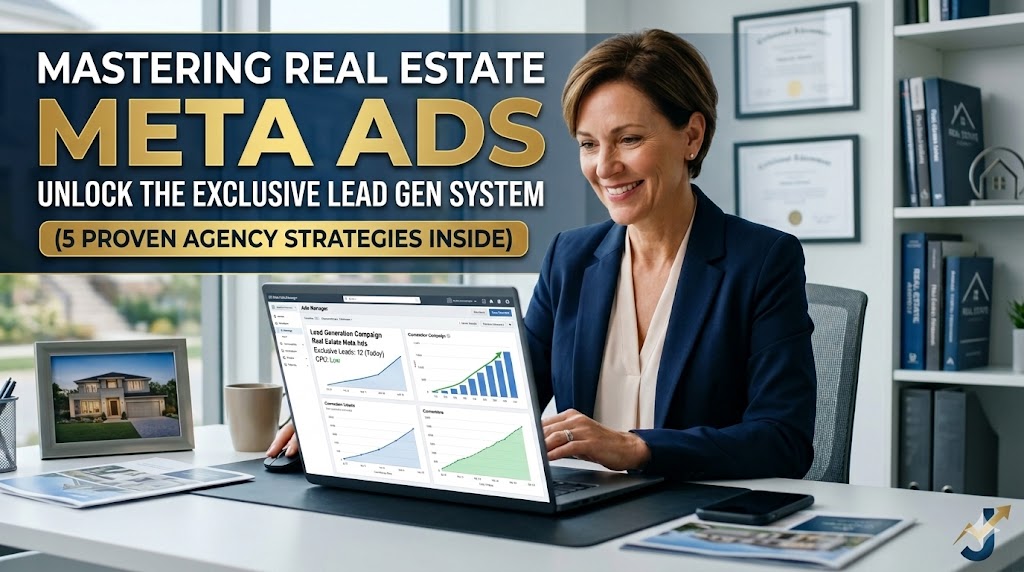
Home Services Performance Marketing Social Media Ads Google Ads Facebook Ads Pay Per Click Ads About Me Knowledge Hub Home Services Performance Marketing Social Media Ads Google Ads Facebook Ads Pay Per Click Ads About Me Knowledge Hub Book A Discovery Call How to Get 50 Exclusive Leads with Real Estate Meta Ads Fast. By Deepak Jaiswal | Construction Growth Expert Reading Time: 16 Minutes Imagine this scenario: Your phone pings with a new lead notification. You drop everything, dial the number within thirty seconds, and enthusiastically introduce yourself. The voice on the other end groans. “You are the fifth agent to call me today. Please stop calling.” If you have ever bought leads from massive online property listing portals, you know exactly how soul-crushing this experience is. You are paying premium prices for “shared data.” You are forced into a race to the bottom, competing against half a dozen other hungry agents for a prospect who is already annoyed. There is a better way. You can become your own lead generation machine. By mastering real estate Meta Ads, you can step out of the shared-lead rat race and build an ecosystem where prospects only see your brand, interact with your content, and give their contact information exclusively to you. In this comprehensive guide, we are going to break down the exact step-by-step framework to generate 50 highly qualified, exclusive leads this month. The Economics of Shared Leads vs. Exclusive Campaigns Before we dive into campaign setups and ad creatives, we need to look at the math. Business is a game of numbers, and the traditional model of buying shared leads is economically flawed. When you rely on third-party aggregators, you do not own the traffic. You are simply renting access to an overworked database. When you run your own real estate Meta Ads, you control the entire pipeline. You decide the area, the budget, the messaging, and the follow-up. Let’s look at a realistic 30-day projection comparing a generic shared-lead provider versus a properly optimized exclusive ad campaign. Lead Generation & Revenue Projection Table Metric Traditional Shared Leads Exclusive Real Estate Meta Ads Monthly Ad Spend $1,000 $1,000 Cost Per Lead (CPL) $50 $20 Total Leads Generated 20 Leads 50 Exclusive Leads Lead Quality / Competition Contacted by 5+ Agents Contacted ONLY by You Average Conversion Rate 1% – 2% 4% – 6% Closed Deals 0 to 1 Deal 2 to 3 Deals Average Commission $10,000 $10,000 Total Revenue $10,000 (If lucky) **$20,000 – $30,000** Return on Investment (ROI) 900% 1,900% – 2,900% Note: The numbers above are conservative estimates. A well-nurtured exclusive pipeline often yields even higher conversion rates over a 90-day period. As you can see, the shift from shared data to exclusive generation completely transforms your profit margins. Now, let’s build your system. Step 1: Navigating the Campaign Setup and Special Categories The biggest mistake agents make is clicking the blue “Boost Post” button on their business page. That button is designed to generate likes and comments, not buyers and sellers. To run profitable real estate Meta Ads, you must use the professional Ads Manager dashboard. Here, your primary objective should always be set to “Leads” or “Sales.” Surviving the Housing Category Rules A few years ago, strict anti-discrimination rules were introduced for housing, employment, and credit advertisements. You must declare your campaign under the “Special Ad Category” for Housing. This means you can no longer target users by age, gender, or hyper-specific zip codes. Your minimum targeting radius is locked to 15 miles. Many agents panic at this restriction. However, it is actually a blessing in disguise. Because you cannot rely on micro-targeting, you are forced to rely on the algorithm. Meta’s machine learning is incredibly smart. If your ad creative and copy are highly specific, the algorithm will automatically find the right buyers within that 15-mile radius. Step 2: Crafting Scroll-Stopping Ad Creatives In the world of real estate Meta Ads, your image or video is what stops the user from scrolling. If you use a boring, poorly lit photo of a house exterior, you will be ignored. Why Video Walkthroughs Win Static images work, but video walkthroughs dominate. You do not need a Hollywood production crew. Grab your smartphone, ensure you have good lighting, and walk through the best parts of a property. Speak directly into the camera. “Hey [City Name], are you looking for a move-in ready home with a massive backyard under $500,000? Let me show you inside.” Video builds instant parasocial trust. By the time the prospect fills out their information and answers your call, they already feel like they know you. Direct Response Copywriting Your ad copy must filter out unqualified people while deeply hooking your ideal client. Avoid generic statements like “Best agent in town.” Instead, use the Call-Out Method: The Hook: Call out the specific audience and location. The Value: List 3 bullet points highlighting the property’s best features or your unique buyer/seller program. The Call to Action (CTA): Tell them exactly what to do next. “Tap ‘Learn More’ below to get the price, address, and a private video tour sent instantly to your inbox.” If you need help designing high-converting creatives, you can explore our Performance Marketing Services, where I build these assets from scratch for top-tier professionals. Step 3: The Lead Capture Mechanism (Filtering the Junk) Getting a user to click your ad is only half the battle. Now, you need to capture their information. You have two main options when running real estate Meta Ads: Native Lead Forms or Dedicated Landing Pages. Native Lead Forms (High Volume) These forms open instantly within the social media app. Because they auto-fill the user’s name, email, and phone number, there is zero friction. You will get a massive volume of leads at a very low cost. However, because it is so easy, you might get people who barely remember clicking the ad. To fix this, always turn on “Higher Intent” in your form settings. Furthermore, add
Solar Sales Strategy
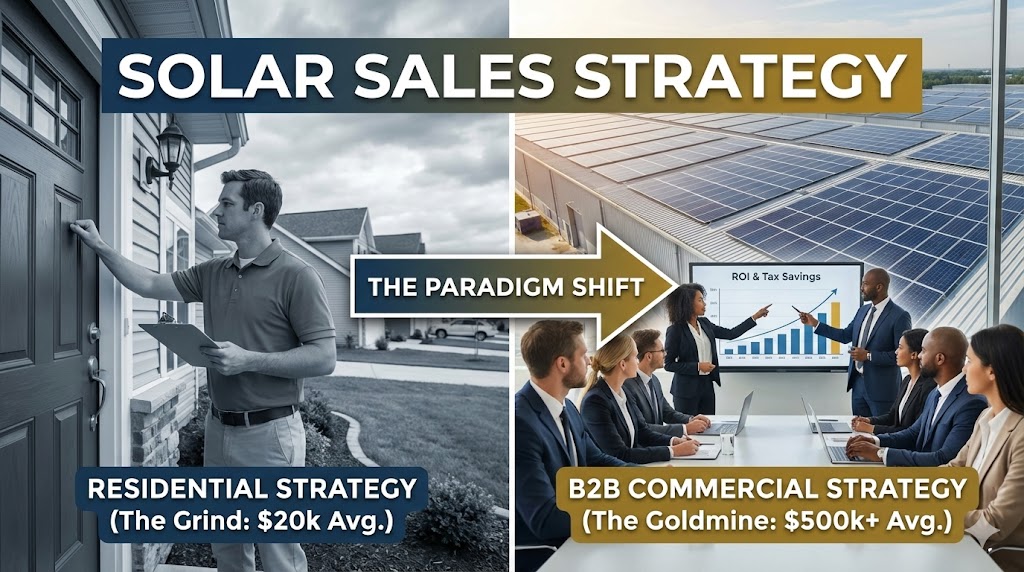
Home Services Performance Marketing Social Media Ads Google Ads Facebook Ads Pay Per Click Ads About Me Knowledge Hub Home Services Performance Marketing Social Media Ads Google Ads Facebook Ads Pay Per Click Ads About Me Knowledge Hub Book A Discovery Call Solar Sales Strategy: 4 Steps to Close Megawatt B2B Projects By Deepak Jaiswal | Global Clean Tech Strategist Reading Time: 12 Minutes The solar industry is evolving rapidly, but most EPCs (Engineering, Procurement, and Construction companies) are still using an outdated playbook. If your current Solar Sales Strategy relies on buying shared leads, knocking on residential doors, and fighting over price with local competitors, you are playing a losing game. The residential market is saturated. It is a “Red Ocean” where margins are shrinking every single day. Meanwhile, a massive “Blue Ocean” exists right in your city: Commercial Real Estate. Factories, warehouses, and cold storage facilities are bleeding money due to rising operational expenses (OpEx). They desperately need solar. But you cannot sell a $1,000,000 commercial system using a $20,000 residential pitch. To win in the megawatt space, you need a complete paradigm shift. In this guide, I will break down a high-ticket B2B Solar Sales Strategy that filters out tire-kickers, speaks directly to the boardroom, and closes massive commercial contracts. Phase 1: The B2C vs. B2B Sales Mindset Before we build your digital funnel, we must fix the pitch. When you sell to a homeowner, you appeal to emotion. You talk about saving the environment and lowering their monthly utility bill. When you sell to a Chief Financial Officer (CFO), emotion is irrelevant. A CFO only cares about the Profit & Loss (P&L) statement. A winning B2B Solar Sales Strategy positions solar not as a “roofing project,” but as a high-yield financial asset. Table 1: Shifting Your Sales Paradigm Element Residential Strategy (The Grind) Commercial Solar Sales Strategy (The Goldmine) The Buyer Homeowners (Emotional decision) CFOs & Facility Managers (Logical, data-driven) The Core Pitch “Save money and go green.” “Maximize MACRS depreciation and reduce OpEx.” Average Ticket $20,000 – $40,000 **$500,000 – $2,000,000+** Sales Cycle 2 to 4 weeks 3 to 12 months (Requires patience and nurturing) The Approach Door-to-door, Facebook Ads LinkedIn ABM, Targeted ROI Funnels Phase 2: The “Financial Value” Lead Magnet (Note: To properly capture the leads generated by this strategy, you need a flawless landing page. Review our guide on the Commercial Solar Lead Generation Funnel to understand the core mechanics of a high-converting digital trap.) A major flaw in the standard Solar Sales Strategy is offering a “Free Consultation” as the first step. For a busy executive, a consultation sounds like a one-hour sales pitch they do not have time for. You must offer upfront financial value with zero friction. Deploy the Custom ROI Calculator: Direct your B2B ad traffic (via LinkedIn or Google Ads) to a landing page featuring an “Industrial Solar Savings Calculator.” How it works: The prospect enters their facility size (sq. ft.) and average monthly energy bill. The calculator instantly displays a rough estimate of their 20-year savings. The Capture: To download the detailed PDF breakdown—complete with ITC tax credit projections—they must enter their name, corporate email, and phone number. This captures the decision-maker’s attention instantly because you are providing actionable financial intelligence before you ever ask for a meeting. Phase 3: The Automated “Trust-Building” Sequence Because a commercial deal can take months to close, your Solar Sales Strategy must include an automated follow-up system. You cannot rely on sales reps to manually email a CFO every week. Once a prospect downloads your calculator, place them into a highly educational 14-day email sequence. The 14-Day Nurture Blueprint: Email 1: Deliver the requested ROI report immediately. Email 2: Send a localized Case Study showing a successful megawatt installation you completed. Email 3: Educate them on roof warranties and structural integrity (a major concern for Facility Managers). Email 4: Demystify the MACRS depreciation schedule and how it offsets their tax liability. Email 5 (The Call to Action): Invite them to a “Virtual Site Audit” via Zoom. By the time they agree to a meeting, they already view your EPC as a trusted energy consultant, not a desperate salesperson. Phase 4: The Virtual Helioscope Audit The final piece of your commercial Solar Sales Strategy is the closing mechanism. Do not drive out to a facility to take physical measurements for a cold lead. It wastes your time and resources if the deal falls through. Instead, use technology to close the gap. How to Execute the Virtual Audit: Get on a 30-minute Zoom call. Share your screen. Use software like Aurora Solar or Helioscope to pull up a high-resolution satellite image of their exact facility. Show them exactly where the panels will be placed, how you will navigate around their rooftop HVAC units, and what their real-time energy offset will look like. This consultative approach completely removes the “salesy” pressure. It frames you as an expert engineer and naturally transitions the conversation into signing an EPC contract. Conclusion: Stop Hustling, Start Engineering Your Sales The residential solar market will always be there, but the race to the bottom is exhausting. If you want to build a truly scalable, high-margin EPC business, you must upgrade your Solar Sales Strategy. By speaking the language of finance, offering interactive calculators instead of generic quotes, and utilizing automated email nurturing, you can bypass the residential grind and secure the commercial projects that transform your company. Stop chasing homeowners. Start partnering with businesses. Ready to build your Commercial Engine? We specialize in transitioning EPCs from residential hustles to automated B2B powerhouses. Book A Discovery Call All Posts Knowledge Hub Exclusive Real Estate Leads Read More Exclusive Solar Leads Read More Get high ticket clients without cold dm Read More Exclusive Kitchen Remodeling Leads Read More Commercial solar leads Read More Off Market Real Estate Leads Read More High ticket B2B leads Read More Exclusive home service leads Read More Facebook ads for solar leads Read More
Real Estate Lead Generation Funnel
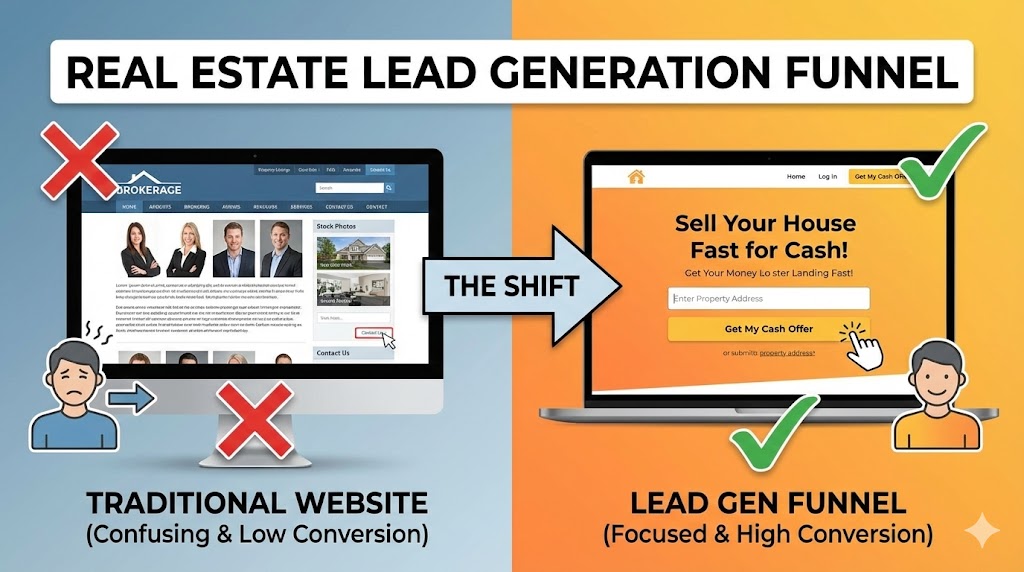
Home Services Performance Marketing Social Media Ads Google Ads Facebook Ads Pay Per Click Ads About Me Knowledge Hub Home Services Performance Marketing Social Media Ads Google Ads Facebook Ads Pay Per Click Ads About Me Knowledge Hub Book A Discovery Call Real Estate Lead Generation Funnel: 5 Steps to Convert Cold Traffic into Motivated Sellers By Deepak Jaiswal | Real Estate Growth Strategist Reading Time: 13 Minutes If you are a Real Estate Investor or Wholesaler running paid ads, there is a silent killer destroying your marketing budget. It isn’t your ad copy. It isn’t your daily budget. It isn’t the Facebook or Google algorithm. It is your Destination. Most investors spend thousands of dollars driving high-quality traffic to a traditional, clunky website. The seller lands on the homepage, sees a navigation bar with “About Us,” “Our Blog,” and “Careers,” gets confused, and leaves. You just paid $30 for a click that bounced in 4 seconds. To thrive in today’s competitive market, you must stop using a “digital brochure” and start using a Real Estate Lead Generation Funnel. A funnel has only one job: to guide a distressed homeowner down a singular path until they give you their address and phone number. In this guide, I will break down the exact architecture of a high-converting Real Estate Lead Generation Funnel that turns cold traffic into exclusive, off-market deals. Phase 1: The Death of the Traditional Real Estate Website traditional website is built for exploration. A funnel is built for conversion. When a motivated seller (someone facing foreclosure, divorce, or holding an inherited property) clicks your ad, they are in a state of high stress. They do not want to read your company history. They want to know one thing: “Can you buy my house for cash, right now?” If your landing page doesn’t answer that question instantly, you lose the deal. Table 1: The Traditional Website vs. The Sales Funnel Feature Traditional Website (The Money Pit) Real Estate Lead Generation Funnel (The Asset) Primary Goal Provide general information. Capture the lead’s contact info. Navigation Multiple links, menus, and distractions. Zero navigation. Only one action to take. The Message “We are the best investors in the city.” “Get a fair cash offer on your house in 24 hours.” Conversion Rate 1% to 3% (Industry Average). 15% to 30%+ (Highly Optimized). Cost Per Lead Extremely High. Significantly Lower. (Note: Driving traffic is only half the battle. If you haven’t set up your campaigns yet, check out our Real Estate Facebook Ads Strategy first, then return here to build the destination.) Phase 2: The “Above the Fold” Hook (The 3-Second Rule) When a user lands on your Real Estate Lead Generation Funnel, you have exactly 3 seconds to convince them to stay. The area they see before scrolling down is called “Above the Fold.” This section must be flawless. The 3 Elements of a Perfect Hook: The Pain-Targeted Headline: Do not use generic headlines like “We Buy Houses.” Use specific, benefit-driven headlines. Example: “Need to Sell Your [City] House Fast? Get a Fair, All-Cash Offer in 24 Hours.” The Sub-Headline: Remove their objections instantly. Example: “No Repairs. No Agent Fees. We Pay All Closing Costs. Choose Your Move-Out Date.” The “Low-Friction” Call to Action (CTA): The biggest mistake is asking for everything at once. Do not ask for their Name, Email, Phone, and SSN on the first step. The Fix: Only ask for the Property Address first. It feels safe and non-invasive. Phase 3: The “Micro-Commitment” Multi-Step Form Once they enter their address and click “Get My Cash Offer,” they enter the core of your Real Estate Lead Generation Funnel. If you use a long, intimidating form, they will abandon the page. Instead, we use a psychological principle called Micro-Commitments. By getting them to answer easy, non-threatening questions first, they become invested in the process. The Multi-Step Form Sequence: Step 1: “What is the property address?” (Low friction). Step 2: “What type of property is this?” (Single Family, Multi-Family, Condo). Step 3: “What is the condition of the property?” (Excellent, Fair, Needs Major Repairs). Step 4: “Why are you looking to sell?” (Inheritance, Foreclosure, Relocating, etc.). Step 5 (The Ask): “Great! We are preparing your offer. Where should we send it?” (Name, Email, Phone Number). By the time they reach Step 5, they have spent 45 seconds filling out the form. The psychological desire to “complete the task” forces them to enter their contact details. Phase 4: Building Unbreakable Trust (Social Proof) Distressed sellers are highly skeptical. They are afraid of being scammed by “we buy ugly houses” predators. Your funnel must build trust instantly. Below the fold, your Real Estate Lead Generation Funnel must feature undeniable social proof. Types of Proof You Must Include: Video Testimonials: Text reviews can be faked. Video cannot. A 30-second video of a relieved homeowner holding a check is worth its weight in gold. The “How It Works” Diagram: Make the process look effortless. Submit Info. We Review & Call. You Get Cash. Local Authority Badges: Display logos like “Better Business Bureau (BBB) A+ Rated,” “Local Chamber of Commerce,” or “5-Star Google Reviews.” Phase 5: The “Speed-to-Lead” Backend Automation A funnel is useless if you do not have a backend system to catch the leads. If a motivated seller submits their information, they are likely submitting it to three other investors as well. The investor who contacts them first wins the deal 80% of the time. Your Real Estate Lead Generation Funnel must be connected to an automated CRM. The 5-Minute Follow-Up Protocol: Minute 0: Lead submits the form. Minute 1: An automated SMS is triggered: “Hi [Name], this is Deepak. I just received your request for an offer on [Address]. I’m pulling up the tax records right now. Are you the owner on the deed?” Minute 2: An automated email goes out containing a short video introducing yourself and your company. Minute 5: You (or your acquisitions manager) call the prospect to begin the
High Ticket Sales Funnel

Home Services Performance Marketing Social Media Ads Google Ads Facebook Ads Pay Per Click Ads About Me Knowledge Hub Home Services Performance Marketing Social Media Ads Google Ads Facebook Ads Pay Per Click Ads About Me Knowledge Hub Book A Discovery Call High Ticket Sales Funnel: How to Sell $10k Offers on Autopilot By Deepak Jaiswal | High Ticket Growth Strategist Reading Time: 14 Minutes If you are a Coach, Consultant, or Agency Owner, you probably suffer from “The Ceiling.” You are charging $150 or $300 per hour. Your calendar is packed with Zoom calls. You are making good money, but you are exhausted. You cannot take a vacation because if you stop working, the money stops coming. You are not a business owner; you are a highly-paid employee of your own company. The only way to break through this ceiling is to stop selling your Time and start selling a Result. And to do that at scale, you need a High Ticket Sales Funnel. In this guide, I will show you how to replace your manual sales calls with an “Automated Webinar” system that sells your $5,000 – $10,000 packages while you sleep. Phase 1: The Math of High Ticket Freedom Most coaches try to scale by selling cheap $47 e-books or $97 courses. This is a trap. To make $100,000 a year selling a $47 e-book, you need 2,127 customers. That is a marketing nightmare. But with a High Ticket Offer ($5,000), you only need 20 customers a year. That’s less than 2 clients a month. Table 1: Low Ticket vs. High Ticket Sales Funnel Feature Low Ticket Funnel ($97 Course) High Ticket Funnel ($5k Coaching) Traffic Needed Massive (10,000+ clicks/mo). Low (500 clicks/mo). Sales Process Automated Checkout. Application + Call (or Webinar). Customer Support High (Hundreds of emails). Low (Small, dedicated group). Profit Margin Low (Ads eat up profits). Massive (Ad spend is negligible). Lifestyle Stressful Volume Game. Relaxed Value Game You can check my blog, Get high-ticket clients without cold dm Phase 2: The “Perfect Webinar” Structure You cannot sell a $5,000 program on a sales page. People need to trust you first. The bridge between a stranger and a high-paying client is the Webinar (or VSL – Video Sales Letter). This is not a boring lecture. It is a carefully scripted sales argument. The 45-Minute Script Formula: The Hook (5 Mins): “How to [Achieve Result] without [Painful Thing] in [Timeframe].” The Story (10 Mins): “I used to struggle just like you until I discovered this New Mechanism.” The Content (20 Mins): Teach them What to do, but not How to do it. Break their false beliefs. Belief 1: “I don’t have time.” -> Show them your time-saving system. Belief 2: “It’s too expensive.” -> Show them the cost of inaction. The Pitch (10 Mins): “If you want me to help you implement this system, apply for my mentorship program.” Phase 3: The “Application” Filter ever let anyone book a call with you directly. You will get tire-kickers who have $0 in their bank account. Your High Ticket Sales Funnel must have a velvet rope. We use an Application Form. The Magic Questions: “What is your current monthly revenue?” (Filters out beginners). “What is your #1 goal for the next 90 days?” (Checks ambition). “Are you willing to invest in yourself to grow faster?” (The money question). If they answer “No” to the investment question, our automation cancels the call immediately. You only talk to qualified buyers. Phase 4: Traffic Sources (YouTube vs. Facebook) Where do high-ticket clients hang out? Facebook/Instagram Ads: Great for “Pattern Interrupt.” Good for targeting broad interests like “Business Owners” or “Health Enthusiasts.” YouTube Ads: The Holy Grail. You can put your video ad in front of your competitor’s video. If someone is watching “How to scale my agency,” show them your ad. My Recommendation: Start with Facebook Ads because it’s cheaper and faster to test. Once you have a winning webinar, scale to YouTube. Phase 5: The “No-Call” Close (Advanced Strategy) Can you sell a $5,000 program without any phone calls? Yes. But you need strong social proof. We call this the “Chat Close.” Instead of booking a Zoom call, the Call-to-Action is “DM me ‘SCALE’ on Instagram.” They watch the webinar. They DM you. You (or your setter) ask 3-4 qualifying questions in the chat. You send the payment link. This works incredibly well for B2B offers where the buyer is busy and doesn’t want another meeting. Conclusion: Build Your Freedom Machine A High Ticket Sales Funnel is not just a marketing campaign; it is a lifestyle design tool. It allows you to impact fewer people more deeply, while making significantly more profit and working fewer hours. Stop chasing $97 sales. Build the system that attracts the Top 1% of your market. Ready to Build Your Funnel? We help experts package their knowledge into a $5k – $10k offer and build the automated systems to sell it. Book A Discovery Call All Posts Knowledge Hub Exclusive Real Estate Leads Read More Exclusive Solar Leads Read More Get high ticket clients without cold dm Read More Exclusive Kitchen Remodeling Leads Read More Commercial solar leads Read More Off Market Real Estate Leads Read More High ticket B2B leads Read More Exclusive home service leads Read More Facebook ads for solar leads Read More Load More End of Content. Frequently Asked Questions 1. Do I need a huge social media following for this? o. A funnel relies on Paid Ads, not organic reach. You can have 0 followers and still make $50k/month if your ad and webinar are good. 2. How much should I spend on ads? We recommend starting with $50 – $100 per day. In High Ticket, a single sale covers your ad spend for the entire month. The ROI is typically 5x to 10x. 3. What if I hate being on camera? You don’t need to show your face. You can run “Voiceover Slides” webinars. As long as
Luxury Kitchen Remodeling Marketing
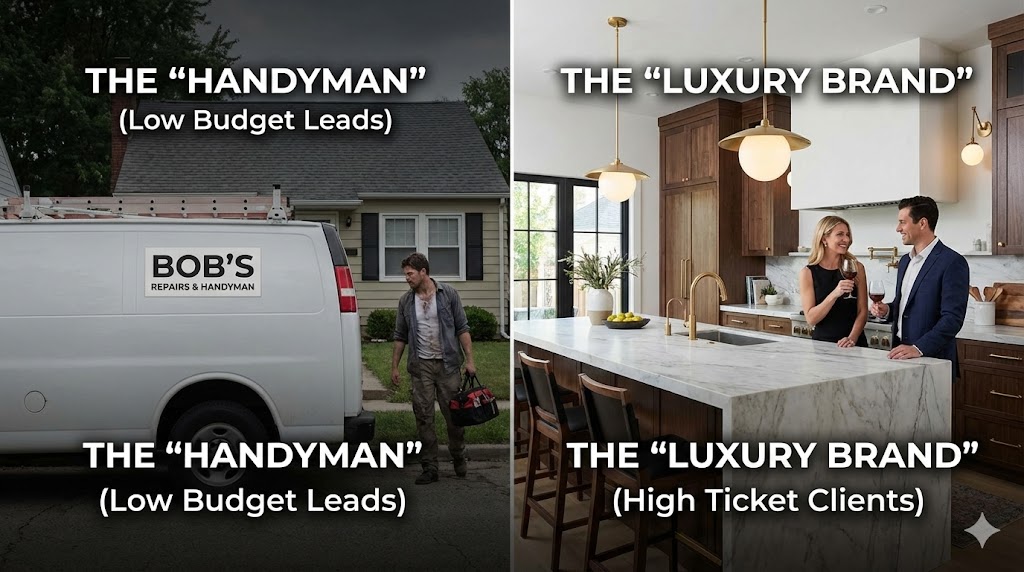
Home Services Performance Marketing Social Media Ads Google Ads Facebook Ads Pay Per Click Ads About Me Knowledge Hub Home Services Performance Marketing Social Media Ads Google Ads Facebook Ads Pay Per Click Ads About Me Knowledge Hub Book A Discovery Call Luxury Kitchen Remodeling Marketing: How to Land $50k+ Contracts Using Instagram By Deepak Jaiswal | Home Services Growth Strategist Reading Time: 11 Minutes If you own a Design-Build or Remodeling firm, you know the frustration of “Lead Aggregators.” You pay for leads on HomeAdvisor, Angi, or Thumbtack. You call the homeowner immediately. They pick up and say: “Oh, I’m just looking for someone to fix a broken cabinet hinge.” You don’t want a $200 repair job. You want the **$50,000 to $100,000 full gut renovation.** You want the client who cares about Quartz countertops, Wolf appliances, and custom islands, not the client who cares about the cheapest price. So, where are these high-end clients? They aren’t on Craigslist. They are scrolling Instagram. Kitchen remodeling is a visual product. You are not selling cabinets; you are selling a “Lifestyle.” In this guide, I will show you exactly how to pivot your Luxury Kitchen Remodeling Marketing from “General Contractor” to “Premium Brand” using Instagram Ads. Phase 1: The “Handyman” vs. “The Brand” Trap Most contractors market themselves like handymen. They post pictures of dusty construction sites, half-finished walls, and plumbing pipes. High-end clients are turned off by this. They don’t want to see the mess; they want to see the Dream. To win $50k+ contracts, you must shift your identity. Table 1: Positioning Yourself for High-Ticket Sales Feature The “Handyman” (Low Budget Leads) The “Luxury Brand” (High Ticket Clients) The Visuals Blurry phone photos of construction dust. Professional “After” shots with good lighting. The Offer “Free Estimate” (Focus on Price). “Free Design Consultation” (Focus on Vision). The Platform Craigslist, Thumbtack, Angi. Instagram, Pinterest, Houzz. The Client “Can you do it cheaper?” “Can you make it look like this photo?” Average Ticket $500 – $5,000. **$50,000 – $150,000.** Phase 2: The “After-Shot” Ad Strategy On Instagram, your image is your headline. If the image is ugly, nobody reads the text. Stop running ads with stock photos. Stop running ads of your van. You need to run “Transformation Ads.” The Carousel Ad Format: Slide 1 (The Hook): A stunning, magazine-quality photo of a finished Luxury Kitchen. Text Overlay: “The Kitchen Your Home Deserves.” Slide 2 (The Detail): A close-up of a premium feature (e.g., a gold faucet, a marble island, or a custom pantry). Slide 3 (The Social Proof): A photo of the happy family cooking in that kitchen. Slide 4 (The Call to Action): “Book Your Design Session.” Why this works: It sells the feeling of owning the kitchen. When a homeowner sees a beautiful space, their brain instantly imagines their family in it. Phase 3: Targeting “Affluence” (Not Just Homeowners) Targeting “Home improvement” interests is too broad. That includes people looking for DIY paint tips. For successful Luxury Kitchen Remodeling Marketing, we use “Lifestyle Layering.” We target people who already buy expensive things. The “Luxury Stack” Targeting: Interests: Interior Design, Modern Architecture, Luxury Real Estate. Brands: Pottery Barn, West Elm, Restoration Hardware, Crate & Barrel. Appliances: Viking Range, Sub-Zero, Wolf Appliances. The Logic: If someone follows “Sub-Zero Refrigerators” on Instagram, they are planning a high-end renovation. They are not looking for a cheap fix. Phase 4: The “Design Consultation” Funnel This is the most critical change you need to make. Stop offering “Free Estimates.” When you say “Estimate,” the client thinks: “He is going to come over, measure my walls, and give me a price.” It becomes a transaction about money. Instead, offer a “Free Design Consultation.” How the Funnel Works: The Ad: Shows a dream kitchen. Button says “Get Design Ideas.” The Landing Page: Shows a gallery of your best work. The Form: Asks qualifying questions: Question: “What is your project goal?” (Full Renovation / New Build). Question: “What is your budget range?” ($30k-$50k / $50k-$80k / $80k+). The Reward: They get a free “Kitchen Trends Guide” PDF and a call to schedule the consultation. By framing it as a “Design Session,” you position yourself as an Expert Consultant, not just a guy with a hammer. Phase 5: Using Reels to Build Trust (The “Behind the Scenes”) Images sell the dream, but Video builds the trust. High-end clients are terrified of hiring a “cowboy” contractor who takes their money and leaves a mess. Use Instagram Reels to show Professionalism. 3 Reels You Must Post: The “Floor Protection” Video: Show your team laying down protective paper and plastic walls before starting work. Caption: “We treat your home like a palace. Zero dust, zero mess.” The “Material Selection” Video: Show yourself at the stone yard picking out a slab of Quartzite. Caption: “Hand-picking the perfect slab for the Johnson family project.” The “Reveal” Video: A slow-motion walkthrough of the finished kitchen with soft music. This proves you care about quality and cleanliness—the two biggest fears of wealthy homeowners. Conclusion: Become the “Neiman Marcus” of Contractors You have a choice. You can be the “Walmart” of contractors—fighting for the lowest price, dealing with cheap leads, and working weekends to make ends meet. Or, you can become the “Neiman Marcus”—the premium brand that people aspire to hire. By implementing this Luxury Kitchen Remodeling Marketing strategy on Instagram, you attract clients who value craftsmanship over cost. You stop chasing leads and start selecting projects. Ready to Upgrade Your Client List? We help elite remodeling firms build high-ticket sales pipelines. Let’s turn your portfolio into a lead generation machine. Book A Discovery Call All Posts Knowledge Hub Exclusive Real Estate Leads Read More Exclusive Solar Leads Read More Get high ticket clients without cold dm Read More Exclusive Kitchen Remodeling Leads Read More Commercial solar leads Read More Off Market Real Estate Leads Read More High ticket B2B leads Read More Exclusive home service leads Read More Facebook ads for solar leads Read More
Commercial Solar Google Ads
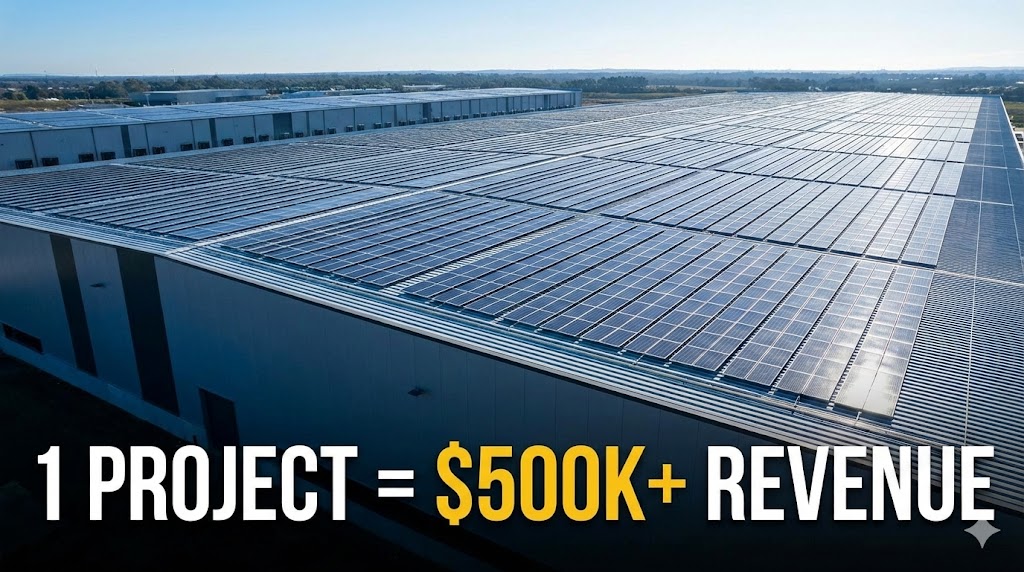
Home Services Performance Marketing Social Media Ads Google Ads Facebook Ads Pay Per Click Ads About Me Knowledge Hub Home Services Performance Marketing Social Media Ads Google Ads Facebook Ads Pay Per Click Ads About Me Knowledge Hub Book A Discovery Call Commercial Solar Google Ads: How to Stop $1000 Paying for “Homeowner” Clicks. By Deepak Jaiswal | Global Clean Tech Strategist Reading Time: 13 Minutes If you run a Commercial Solar EPC, your Google Ads dashboard probably tells a lie. You see a high Click-Through Rate (CTR). You see a decent Cost Per Lead (CPL). You think, “Great, the campaign is working.” But then you talk to your sales team. “Deepak, these leads are trash. They are all homeowners looking for a 5kW system for their backyard. We only do 100kW+ commercial projects.” This is the “Residential Leak.” You are paying $20, $30, or even $50 per click for traffic that you cannot serve. You are essentially subsidizing the marketing for residential installers. To fix this, you don’t need more budget. You need a specialized Commercial Solar Google Ads strategy that acts like a firewall—blocking the homeowners and letting only the CFOs and Facility Managers through. In this guide, I will show you the exact “Negative Keyword” architecture and “B2B Ad Copy” secrets we use to turn Google Ads into a commercial contract machine. Phase 1: The “Broad Match” Disaster The biggest mistake Commercial EPCs make is trusting Google’s default settings. Google wants you to spend money, so they push “Broad Match” keywords. If you bid on the keyword “Solar Panels”, Google will show your ad for: “Solar panels for RV” “Cheap solar lights for garden” “Tesla solar roof cost” “DIY solar kit” None of these are your clients. A Commercial EPC needs to be hyper-specific. The Fix: Intent-Based Match Types We switch strategies from “Volume” to “Value.” We stop bidding on generic terms and start bidding on “Project-Based” terms. Instead of: “Solar Installer” Bid on: “Commercial solar carports” OR “Industrial solar PPA rates” Phase 2: The 500-Word “Negative Keyword” Firewall This is the most valuable asset I give my clients. A “Negative Keyword List” tells Google: “If someone types this word, DO NOT show my ad.” For a Commercial Solar Google Ads campaign, your negative list must be massive. Table 1: The “Firewall” Strategy Category Negative Keywords (Exclude These) Why? Residential Terms Home, House, Residential, Roof shingle, Backyard, Patio, Garden, Pool. Filters out homeowners. Small Scale Kit, DIY, Portable, Camping, RV, 12v, Battery bank, Calculator (generic). Filters out hobbyists. Job Seekers Jobs, Career, Salary, Training, Course, Certification, Internship. Filters out people looking for work. Competitors Tesla, Sunrun, SunPower (Residential brands). Filters out brand-loyal homeowners. By uploading this list before you launch, you save 40-50% of your budget immediately. Phase 3: Ad Copy That “Disqualifies” the Click Usually, marketing is about attracting clicks. In Commercial Solar Google Ads, we want to repel the wrong clicks. We use the Ad Text itself to warn homeowners: “Do not click this.” The “B2B” Filter Technique: Headline 1: Commercial & Industrial Solar Only. Headline 2: Minimum Project Size: 50kW. Description: Serving Warehouses, Factories, and Cold Storage. No Residential Inquiries. Why this works: When a homeowner sees “Minimum 50kW” or “No Residential,” they stop. They don’t click. You save money. But when a Facility Manager sees it, they think: “Finally, a serious company that understands my scale.” Phase 4: The “Asset-Focused” Landing Page If your ad sends traffic to your homepage, you lose. Your homepage likely has pictures of houses, or generic text. You need a dedicated Commercial Landing Page. Anatomy of a High-Converting B2B Page: The Hero Image: A drone shot of a massive flat roof (Warehouse/Factory), NOT a house with a dog in the yard. The Headline: “Reduce Industrial OpEx by 40% with a Solar PPA.” The Form: Do not ask for just “Name/Email.” Ask: “Company Name” Ask: “Estimated Annual Energy Bill” (Dropdown: <$10k, $10k-$50k, >$50k). Ask: “Roof Type” (Flat/Metal/TPO). This form scares away small leads and attracts serious buyers who want a consultation, not a sales pitch. Phase 5: Offline Conversion Tracking (OCT) This is the “Secret Weapon” of top agencies. Standard Google Ads optimizes for “Leads” (Form fills). But for you, a lead with a $200 bill is worthless. A lead with a $20,000 bill is gold. We set up Offline Conversion Tracking. Lead comes in via Google Ads. Your Sales Team qualifies them (e.g., “This is a Factory”). We send that data back to Google. Google’s AI learns: “Oh, Deepak wants Factory owners, not Homeowners.” Google automatically starts showing your ads to more business owners. This loop creates a smarter campaign every single month. Conclusion: Precision Over Volume In Commercial Solar Google Ads, the goal is not “More Leads.” It is “Better Leads.” You don’t need 100 calls a month. You need 5 qualified calls with CFOs who own large facilities. One closed deal pays for the entire year’s marketing budget. Stop feeding the “Residential Leak.” Implement the Negative Keyword Firewall and start bidding on high-value projects today. Ready to Audit Your Account? If you suspect you are wasting money on homeowner clicks, let us run a free “Negative Keyword Audit” on your account. Book A Discovery Call All Posts Knowledge Hub Exclusive Real Estate Leads Read More Exclusive Solar Leads Read More Get high ticket clients without cold dm Read More Exclusive Kitchen Remodeling Leads Read More Commercial solar leads Read More Off Market Real Estate Leads Read More High ticket B2B leads Read More Exclusive home service leads Read More Facebook ads for solar leads Read More Load More End of Content. Frequently Asked Questions 1. What is a good Cost Per Lead (CPL) for Commercial Solar? Commercial leads are more expensive than residential. Expect to pay $150 – $300 per qualified lead. However, since the contract value is $500k+, this CPL is extremely healthy. 2. Should I bid on competitor names? Only bid on other Commercial EPCs. Do not bid on residential giants like Sunrun
Real Estate Facebook Ads Strategy
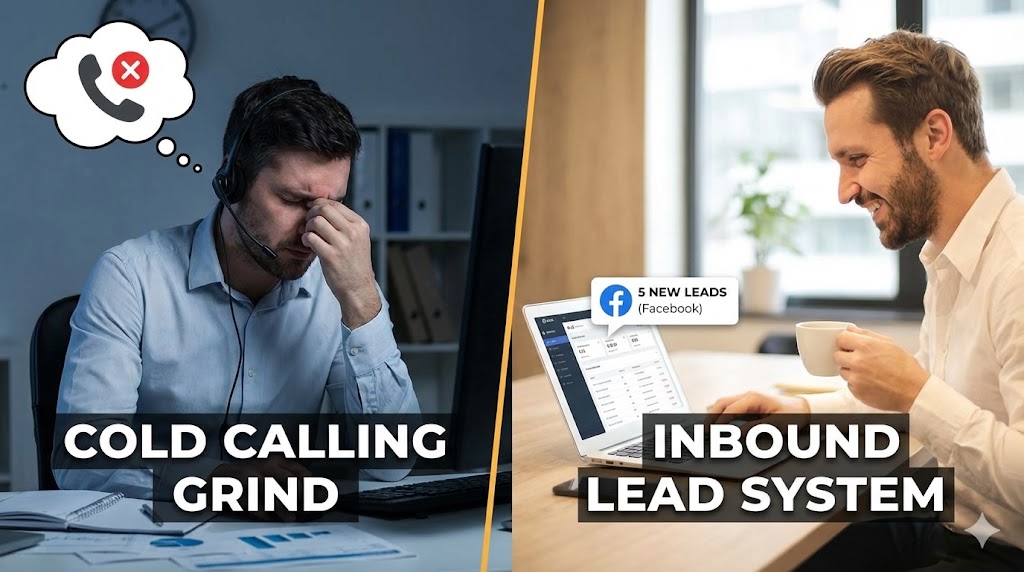
Home Services Performance Marketing Social Media Ads Google Ads Facebook Ads Pay Per Click Ads About Me Knowledge Hub Home Services Performance Marketing Social Media Ads Google Ads Facebook Ads Pay Per Click Ads About Me Knowledge Hub Book A Discovery Call Real Estate Facebook Ads Strategy: 5 Steps to Find “Shadow Sellers” in Today’s Market By Deepak Jaiswal | Real Estate Growth Strategist Reading Time: 12 Minutes If you are looking for a winning Real Estate Facebook Ads Strategy to flood your pipeline with off-market deals, you are in the right place. Most investors struggle with Google Ads because the cost per click (CPC) is constantly rising. You are often fighting in a “Red Ocean” where 20 other wholesalers are bidding on the same “Sell my house fast” keyword. But there is a better way. There is a hidden market of homeowners who are thinking about selling but haven’t searched on Google yet. We call them “Shadow Sellers.” These are people facing divorce, probate, or financial stress who need a solution before they list with a Realtor. In this guide, I will share the exact Real Estate Facebook Ads Strategy that allows you to bypass the competition, target motivated sellers using behavioral AI, and generate exclusive leads for a fraction of the cost. Why Your Current Real Estate Facebook Ads Strategy is Failing Before we dive into the setup, let’s fix the mindset. If you have tried Facebook Ads before and failed, it’s likely because you treated Facebook like Google. Google is Search: The user asks a question. Facebook is Discovery: The user is scrolling. You must interrupt them. A successful Real Estate Facebook Ads Strategy relies on “Pattern Interrupts.” You cannot post a stock photo of a happy family and expect a distressed seller to click. You need to target their pain points visually and emotionally. Step 1: The “Behavioral Stacking” Targeting Method Since Facebook updated its housing targeting options (Special Ad Category), many investors gave up. But smart investors adapted. The core of our Real Estate Facebook Ads Strategy involves “Interest Stacking.” We don’t target “Homeowners” directly. We target the signals of distress. The Distress Signals: Probate & Inheritance: Target interests like Estate Planning, Funeral Services, or Probate Law. Financial Stress: Target interests like Debt Consolidation, Credit Repair, or Pawn Shops. Divorce: Target interests like Family Mediation or Divorce Law. When you layer these interests, Facebook’s AI finds people who are likely going through a major life transition and need to sell an asset quickly. Step 2: “Ugly Ads” – The Secret to a Winning Real Estate Facebook Ads Strategy This is counter-intuitive, but essential. Polished ads fail. Ugly ads convert. If your ad looks like a corporate flyer from a bank or a Realtor, distressed sellers will ignore it. They don’t want a “Process”; they want a “Person” with cash. High-Converting Creative Formats: The Bandit Sign Photo: A simple photo of a yellow “We Buy Houses” sign nailed to a pole. It signals “Fast Cash” instantly. The Selfie Video: Walk through a distressed property you just bought. Say, “I just bought this house on Main Street. The owner needed cash in 7 days. Do you have a house like this?” The Notes App Screenshot: A screenshot of a text note saying: “Buying 3 houses in [City] this month. Any condition.” Incorporating these “raw” visuals is a critical part of a high-performing Real Estate Facebook Ads Strategy. Step 3: Lead Forms vs. Landing Pages Should you send traffic to your website? No. For 90% of investors, using Facebook’s built-in Instant Lead Forms drastically lowers the cost per lead. Why Lead Forms Work: Zero Friction: Facebook auto-fills the user’s Name, Email, and Phone Number. Speed: The user never leaves the app. However, to ensure quality, our Real Estate Facebook Ads Strategy requires adding a “Custom Question” to the form. Question: “How soon are you looking to sell?” Options: Immediately / 1-3 Months / Just Browsing. This simple filter blocks the tire-kickers and ensures only serious sellers enter your CRM. You can learn more about ad formats in the Facebook Ad Library. Step 4: The “Omnipresent” Retargeting Layer A robust Real Estate Facebook Ads Strategy isn’t just about the first click. Most sellers need to see you 5-7 times before they trust you. We set up a 30-Day Retargeting Sequence: Days 1-3: Show a video testimonial of a happy seller. Days 4-7: Show a photo of a check or wire transfer receipt (Social Proof). Days 8-30: Show a video busting myths (e.g., “Why you don’t need to do repairs”). By being everywhere, you position yourself as the local authority. Step 5: Automation – The Engine Behind the Strategy Generating the lead is only half the battle. If you don’t call within 5 minutes, the lead goes cold. According to data from the National Association of Realtors (NAR), response time is the #1 factor in conversion. The “Speed-to-Lead” Workflow: Lead Submits Form. Instant SMS: “Hey [Name], I just saw your property inquiry. I’m running numbers now. Are you the owner?” Bridge Call: Your phone rings, connecting you to the lead instantly. (We discuss this automation in depth in our guide on Real Estate Lead Automation Systems. Conclusion: Implement This Real Estate Facebook Ads Strategy Today Stop fighting for scraps on Google. The “Shadow Market” on Facebook is wide open, but only for investors who know how to target behavior, not just keywords. By implementing this Real Estate Facebook Ads Strategy, you stop being a “Telemarketer” and start being a “Transaction Engineer.” You build a pipeline of exclusive leads that your competitors don’t even know exist. Ready to Scale? 3If you want to install this system without the trial and error, book a strategy call with us. We specialize in building this exact infrastructure for wholesalers. Book A Discovery Call All Posts Knowledge Hub Exclusive Real Estate Leads Read More Exclusive Solar Leads Read More Get high ticket clients without cold dm Read More Exclusive Kitchen Remodeling Leads Read More