
Solar Sales Strategy: 4 Steps to Close Megawatt B2B Projects
By Deepak Jaiswal | Global Clean Tech Strategist Reading Time: 12 Minutes
The solar industry is evolving rapidly, but most EPCs (Engineering, Procurement, and Construction companies) are still using an outdated playbook.
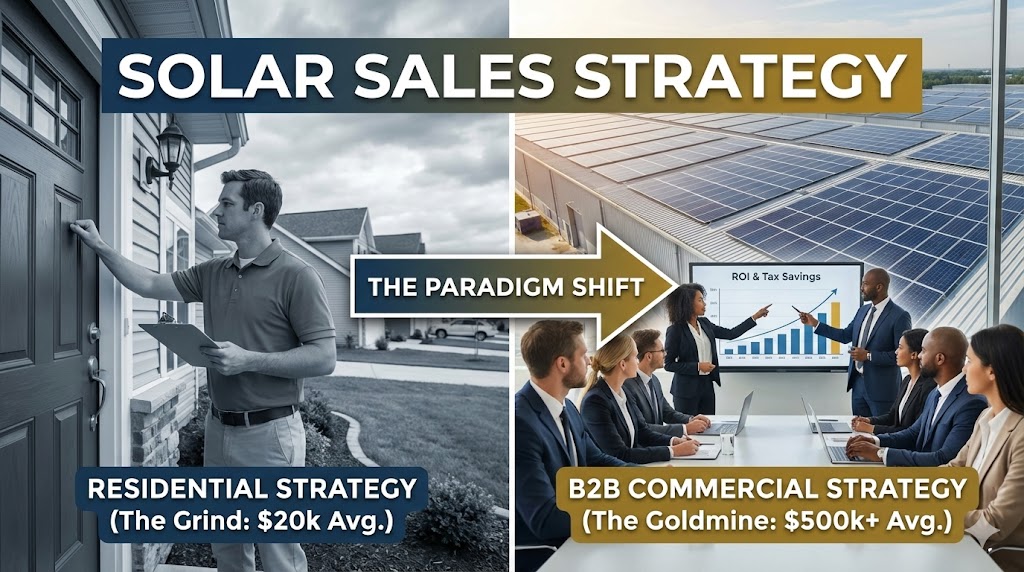
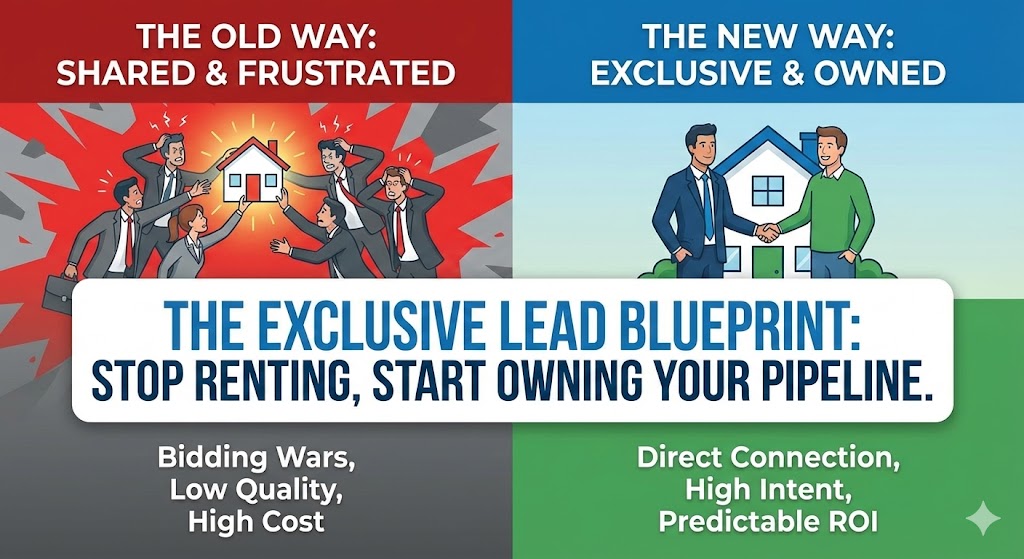
If your current Solar Sales Strategy relies on buying shared leads, knocking on residential doors, and fighting over price with local competitors, you are playing a losing game. The residential market is saturated. It is a “Red Ocean” where margins are shrinking every single day.
Meanwhile, a massive “Blue Ocean” exists right in your city: Commercial Real Estate.
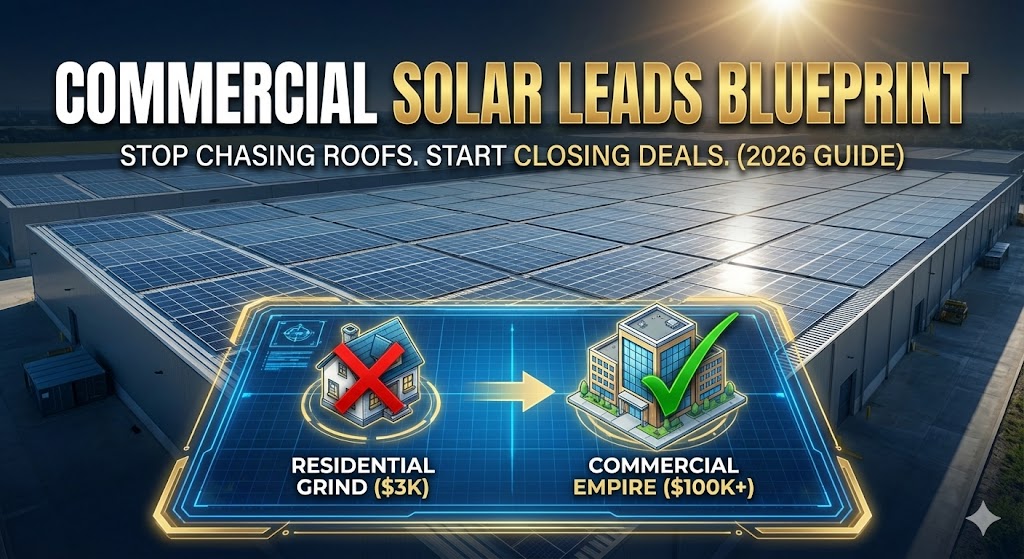
Factories, warehouses, and cold storage facilities are bleeding money due to rising operational expenses (OpEx). They desperately need solar. But you cannot sell a $1,000,000 commercial system using a $20,000 residential pitch.
To win in the megawatt space, you need a complete paradigm shift. In this guide, I will break down a high-ticket B2B Solar Sales Strategy that filters out tire-kickers, speaks directly to the boardroom, and closes massive commercial contracts.
Phase 1: The B2C vs. B2B Sales Mindset
Before we build your digital funnel, we must fix the pitch.
When you sell to a homeowner, you appeal to emotion. You talk about saving the environment and lowering their monthly utility bill. When you sell to a Chief Financial Officer (CFO), emotion is irrelevant. A CFO only cares about the Profit & Loss (P&L) statement.
A winning B2B Solar Sales Strategy positions solar not as a “roofing project,” but as a high-yield financial asset.
Table 1: Shifting Your Sales Paradigm
| Element | Residential Strategy (The Grind) | Commercial Solar Sales Strategy (The Goldmine) |
| The Buyer | Homeowners (Emotional decision) | CFOs & Facility Managers (Logical, data-driven) |
| The Core Pitch | “Save money and go green.” | “Maximize MACRS depreciation and reduce OpEx.” |
| Average Ticket | $20,000 – $40,000 | **$500,000 – $2,000,000+** |
| Sales Cycle | 2 to 4 weeks | 3 to 12 months (Requires patience and nurturing) |
| The Approach | Door-to-door, Facebook Ads | LinkedIn ABM, Targeted ROI Funnels |
Phase 2: The "Financial Value" Lead Magnet
(Note: To properly capture the leads generated by this strategy, you need a flawless landing page. Review our guide on the Commercial Solar Lead Generation Funnel to understand the core mechanics of a high-converting digital trap.)
A major flaw in the standard Solar Sales Strategy is offering a “Free Consultation” as the first step. For a busy executive, a consultation sounds like a one-hour sales pitch they do not have time for.
You must offer upfront financial value with zero friction.
Deploy the Custom ROI Calculator:
Direct your B2B ad traffic (via LinkedIn or Google Ads) to a landing page featuring an “Industrial Solar Savings Calculator.”
How it works:
The prospect enters their facility size (sq. ft.) and average monthly energy bill.
The calculator instantly displays a rough estimate of their 20-year savings.
The Capture: To download the detailed PDF breakdown—complete with ITC tax credit projections—they must enter their name, corporate email, and phone number.
This captures the decision-maker’s attention instantly because you are providing actionable financial intelligence before you ever ask for a meeting.
Phase 3: The Automated "Trust-Building" Sequence
Because a commercial deal can take months to close, your Solar Sales Strategy must include an automated follow-up system. You cannot rely on sales reps to manually email a CFO every week.
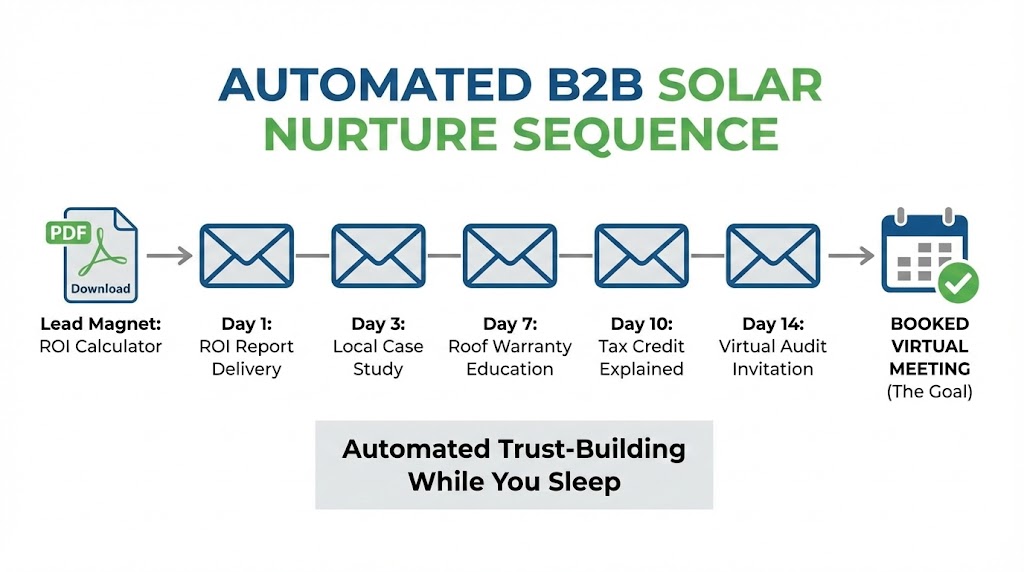
Once a prospect downloads your calculator, place them into a highly educational 14-day email sequence.
The 14-Day Nurture Blueprint:
Email 1: Deliver the requested ROI report immediately.
Email 2: Send a localized Case Study showing a successful megawatt installation you completed.
Email 3: Educate them on roof warranties and structural integrity (a major concern for Facility Managers).
Email 4: Demystify the MACRS depreciation schedule and how it offsets their tax liability.
Email 5 (The Call to Action): Invite them to a “Virtual Site Audit” via Zoom.
By the time they agree to a meeting, they already view your EPC as a trusted energy consultant, not a desperate salesperson.
Phase 4: The Virtual Helioscope Audit
The final piece of your commercial Solar Sales Strategy is the closing mechanism.
Do not drive out to a facility to take physical measurements for a cold lead. It wastes your time and resources if the deal falls through. Instead, use technology to close the gap.
How to Execute the Virtual Audit:
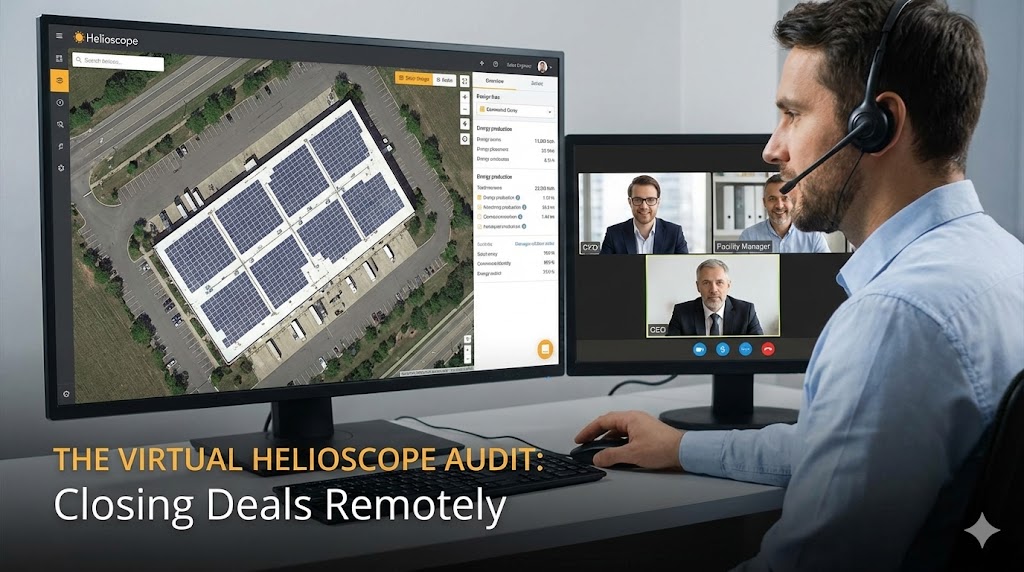
Get on a 30-minute Zoom call. Share your screen. Use software like Aurora Solar or Helioscope to pull up a high-resolution satellite image of their exact facility.
Show them exactly where the panels will be placed, how you will navigate around their rooftop HVAC units, and what their real-time energy offset will look like.
This consultative approach completely removes the “salesy” pressure. It frames you as an expert engineer and naturally transitions the conversation into signing an EPC contract.
Conclusion: Stop Hustling, Start Engineering Your Sales
The residential solar market will always be there, but the race to the bottom is exhausting.
If you want to build a truly scalable, high-margin EPC business, you must upgrade your Solar Sales Strategy. By speaking the language of finance, offering interactive calculators instead of generic quotes, and utilizing automated email nurturing, you can bypass the residential grind and secure the commercial projects that transform your company.
Stop chasing homeowners. Start partnering with businesses.
Ready to build your Commercial Engine?
We specialize in transitioning EPCs from residential hustles to automated B2B powerhouses.
- All Posts
- Knowledge Hub
Frequently Asked Questions
1. Is a B2B Solar Sales Strategy more expensive to implement?
The initial Cost Per Lead (CPL) is higher. You might pay $100+ for a CFO’s contact information via LinkedIn Ads. However, because a single commercial contract is worth upwards of $500,000, your overall Return on Investment (ROI) is exponentially larger than residential campaigns.
2. Should we advertise Power Purchase Agreements (PPAs)?
Absolutely. Many businesses are interested in solar but lack the upfront Capital Expenditure (CapEx). Highlighting “Zero-CapEx Solutions” or PPAs is one of the strongest hooks you can use in your sales pitch.
3. How long does a commercial digital funnel take to build?
A fully integrated system—including the ROI calculator, the landing pages, the email copywriting, and the CRM automation—typically takes 4 to 6 weeks to develop and launch.
4. Can I still use Google Ads for B2B solar?
Yes, but your Solar Sales Strategy must include a massive “Negative Keyword” list to filter out residential searches. Block words like home, house, residential, DIY, kits, and RV. Only bid on high-intent phrases like industrial solar installation.
5. How do we close the deal without an immediate site visit?
Offer a “Virtual Site Audit.” Getting on a Zoom call and using 3D modeling software builds massive trust and acts as the perfect bridge to a physical site inspection and final contract signing.